
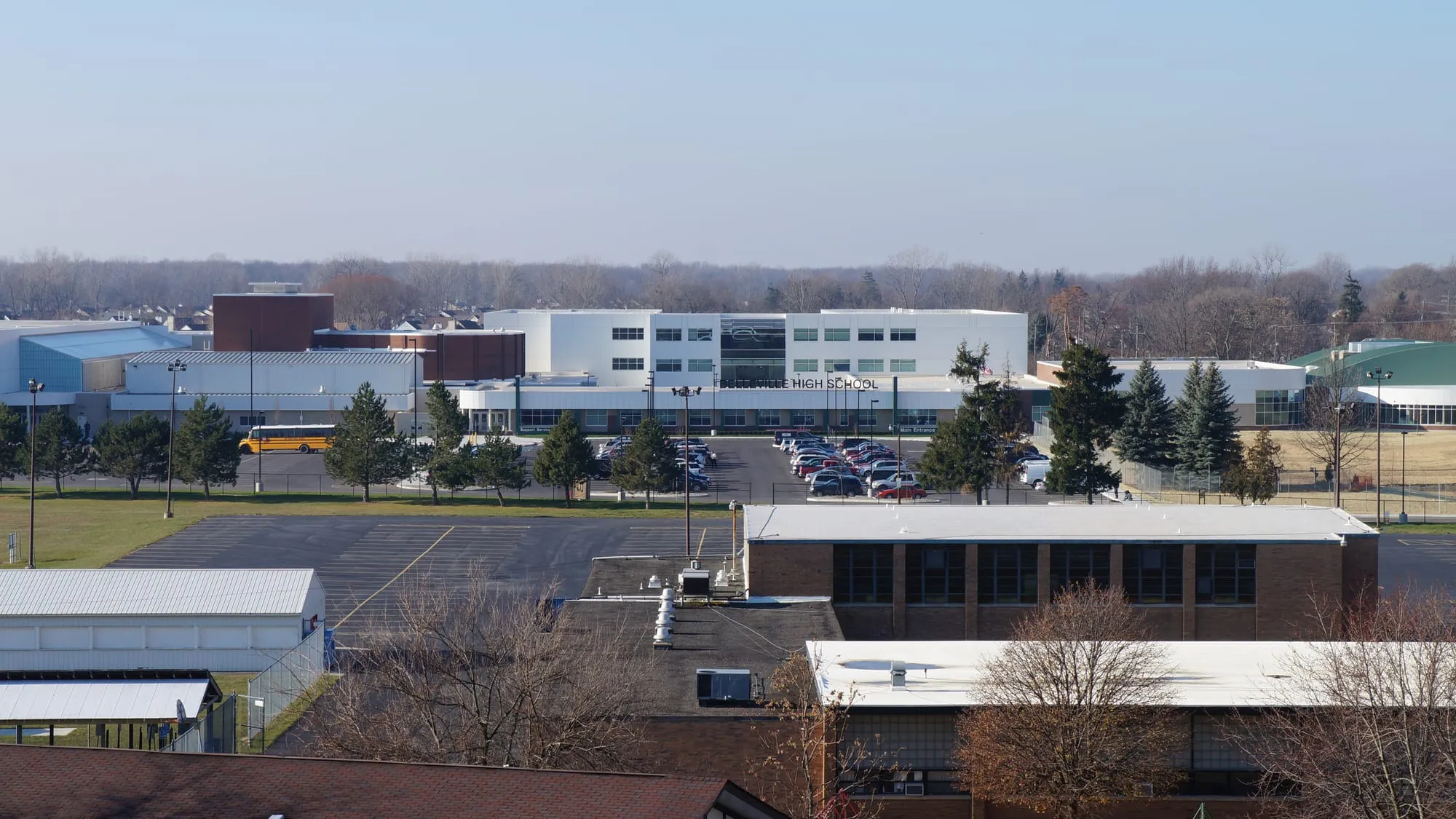
Belleville High School stands west of Detroit, beyond the city line that gives Detroit techno its name. Juan Atkins met Derrick May and Kevin Saunderson there as a teenager. They traded tapes, discussed records, learned equipment, and organized parties. That suburban school was one of the specific places through which young Black listeners assembled a music tied to Detroit. 1
The familiar phrase “Belleville Three” was applied later. It works as shorthand, but it leaves much of the scene outside the frame. Eddie Fowlkes, radio programmers, club workers, record-store staff, label partners, and a following generation all helped establish the music. Detroit techno did not arrive as the result of three synchronized biographies. It grew through exchanges that can be traced across schools, basements, radio, factories, clubs, and independent record companies.
Radio before the genre
The Electrifying Mojo’s late-night Detroit broadcasts ignored narrow format rules. European electronic music could appear beside Parliament-Funkadelic, new wave, Prince, and local experiments. For listeners such as Atkins, the program supplied juxtaposition rather than a curriculum. Records that the retail market separated were made to share the same air.
Radio had practical advantages. A teenager did not need club admission or an imported record budget to hear the program. A cassette could capture part of the broadcast, turning a one-time sequence into material for replay and exchange. Reception extended beyond Detroit into suburbs such as Belleville, joining listeners who might not meet until school the next day.
Mojo later played work by local producers, closing a feedback loop. Musicians first learned from the broadcast, then used it as an outlet through which their records could reenter the city. The Detroit Historical Society’s account of Atkins places that two-way radio relationship near the start of the story. 1
Three students, different methods
Atkins had studied music and developed an early interest in electronic instruments. At Belleville, he introduced May and Saunderson to DJ technique and shared records. The three friends overlapped without becoming interchangeable. Their later labels and production styles would make those differences clearer.
May’s account includes visits to Chicago, where his mother lived. He heard the emerging house scene and carried that experience back into conversations about a Detroit club culture. Saunderson would become especially effective at building tracks that crossed into larger dance and pop markets. Atkins developed a restrained electronic language and an independent label structure early.
Treating them as a single unit flattens the productive disagreement. A scene forms because participants answer one another, not because everyone holds the same aesthetic position. Shared listening gave the group a base; different judgments about rhythm, voice, futurism, and audience gave the records range. 2
Cybotron and the sound of systems
Atkins formed Cybotron with Richard Davis around 1980. Their music joined synthesizers, sequencers, drum machines, processed voices, and ideas drawn from science fiction and technological change. “Clear” became the project’s most widely circulating record. Its clipped electronic pattern left space rather than filling every frequency.
Detroit’s automobile industry is often used as a ready explanation: assembly lines produced machine music. The relation is more complicated. Industrial production shaped employment, geography, race, and the city’s international image. By the early 1980s, automation and deindustrialization were also changing who benefited from that system. Electronic sound could address the machine age without imitating a factory.
Cybotron’s technological language offered distance from stereotypes imposed on Black music. Synthesizers did not remove funk; they changed its surface and scale. The result could sound precise, estranged, and bodily at once. Calling it cold misses how strongly the patterns organize movement.
The affordable studio is still a network
Electronic instruments made it possible for a small group to produce music without hiring a large ensemble. Possible did not mean automatic. A drum machine needed programming, a synthesizer needed voicing, and a sequencer needed to hold devices together. Owners shared knowledge, borrowed equipment, and learned from manuals, mistakes, shops, and one another.
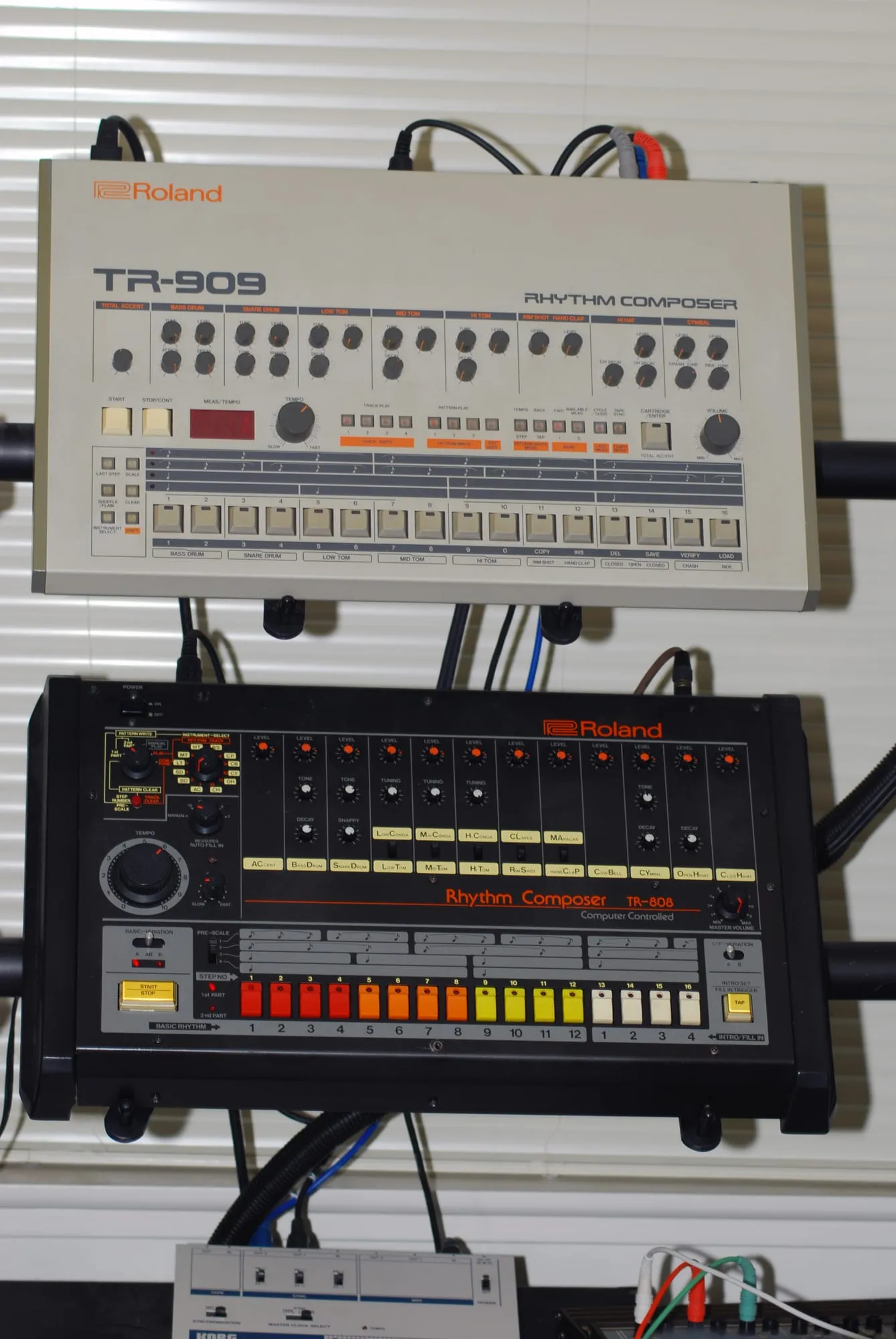
The TR-808 generated its percussion through analog synthesis; the later TR-909 combined analog circuits with digital samples. Producers valued both partly because their sounds did not reproduce an acoustic drum kit convincingly. The kick, clap, cymbal, and hi-hat behaved as distinct electronic materials.
Step programming made repetition visible across buttons, but the pattern was only a beginning. Tuning, accents, decay, mixing, and arrangement determined whether a loop held attention. Detroit records frequently use subtraction with great care. A part enters after the ear has learned the gap it will occupy.
Metroplex makes an address
After Cybotron, Atkins recorded as Model 500 and founded Metroplex. A label converted local studio work into a durable object with a catalog number, graphic identity, and route through shops and distributors. Independence meant control over selection and presentation; it also meant invoices, pressing quantities, mastering, and the risk of unsold stock.
Metroplex helped establish techno as a record economy. A release could reach DJs without waiting for a major label to understand the market. White-label and small-run culture encouraged rapid response, but records were not disposable. Their etched numbers and sleeves now provide some of the clearest evidence for who worked with whom.
The word “techno” had circulated in titles and discussions before British marketing consolidated it around Detroit releases in the late 1980s. As with house, the name did not create the practice. It gave distributors and listeners a way to gather records whose makers already shared equipment, radio, friendships, and local ambition.
The twelve-inch single also shaped arrangement. A long side gave a DJ room to blend the opening rhythm before the central motif arrived and to exit through percussion after other parts had cleared. Wide grooves could carry strong low frequencies, while the label’s printed center supplied only limited space for explanation. Artist aliases, catalog numbers, and company addresses did more work than a conventional album cover.
This relative anonymity was not the absence of authorship. Model 500 named a project that could sound larger than one person, and Metroplex joined each release to a continuing system. Buyers learned the sequence of catalog numbers and the marks in the runout groove. Knowledge circulated through record-store recommendations and DJ tracklists, not a prominent portrait on the sleeve. Techno’s futuristic identities were built through these material details as well as through synthesizer tone.
Transmat, KMS, and separate exits
Derrick May established Transmat; Kevin Saunderson developed KMS. These were not branch offices of one Belleville company. Each label built its own visual system, collaborators, and route outward. May’s recordings as Rhythim Is Rhythim emphasized sweeping string figures and volatile arrangement. Saunderson’s work, including vocal productions, found major international audiences.
The labels demonstrate why “the Detroit sound” remains plural. Some tracks are sparse and mechanical; others are harmonically lush. Some foreground a singer; others use a brief spoken or processed signal. Shared tempo and equipment do not produce identical emotional claims.
European demand became essential. Records that were specialist items in the United States could be licensed, compiled, and played to large crowds abroad. Travel turned that demand into personal networks between Detroit, London, Amsterdam, and Berlin. Export brought income and recognition while also allowing overseas accounts to define the genre for listeners who had little access to Detroit’s own context.
Clubs built for return
Detroit’s early techno scene used parties, social clubs, and temporary spaces rather than one universally recognized birthplace. Deep Space Soundworks organized events and mixes. Later, the Music Institute offered a room designed around the developing community. Its importance lay in repetition: people could return, hear how records changed, and form expectations together.
May’s history connects the desire for such a venue to his Chicago experience. The movement of ideas between the cities was direct, not a later critic’s comparison. Detroit artists absorbed house while maintaining a separate production language and social network. 2
A club made records legible at intended volume. Low frequencies became architectural, and a long blend exposed whether two arrangements could coexist. Studio decisions were tested in public, then carried back into the next session. Scene and record developed through the same loop.
The Wizard widens the map
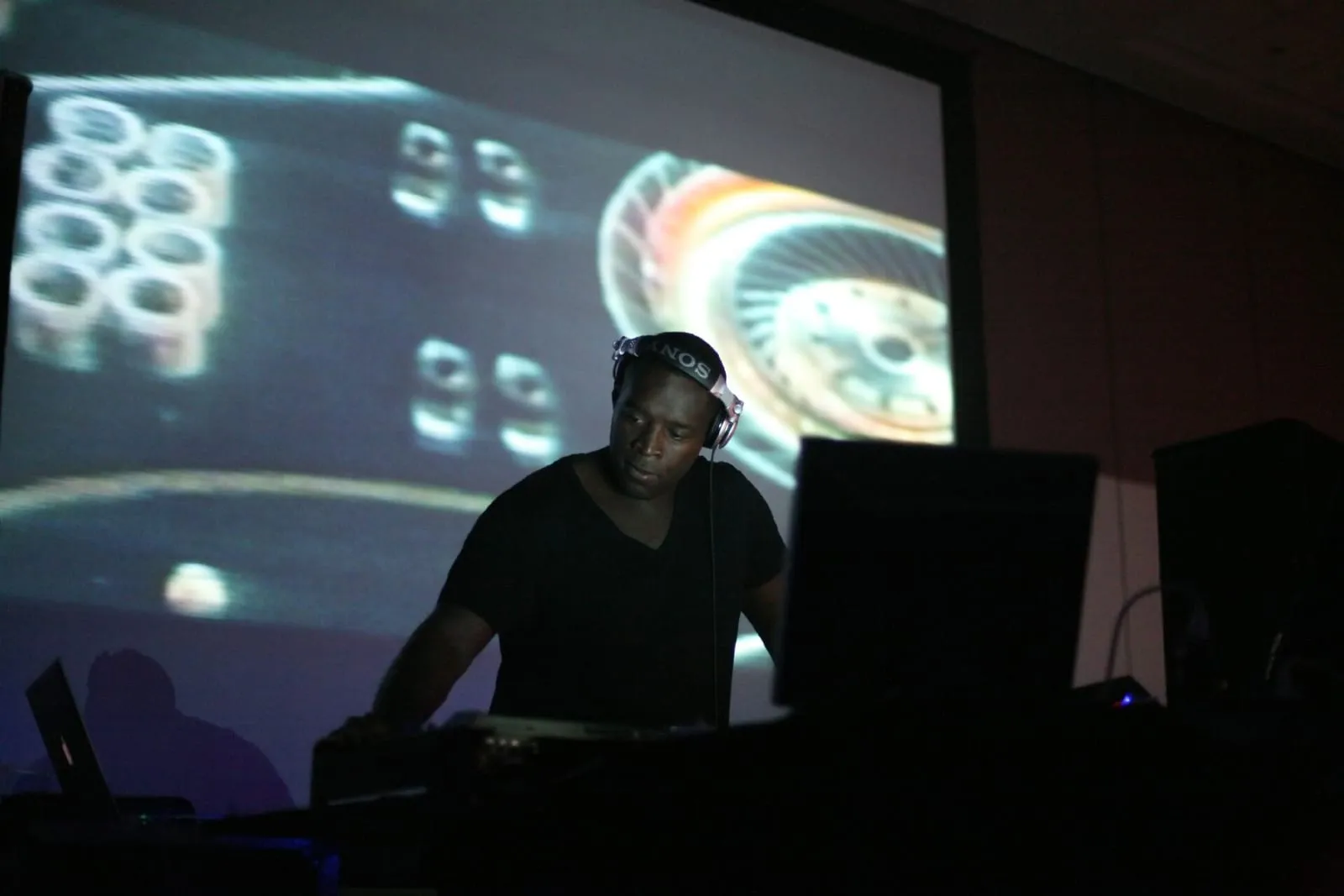
Jeff Mills represents a later route through Detroit radio. Performing as the Wizard, he developed rapid, technically exact mixes that crossed techno, house, hip-hop, and industrial music. Radio again became a performance medium rather than a channel that merely played finished tracks.
Mills later co-founded Underground Resistance with Mike Banks. The collective’s masked, militant graphic identity and self-controlled distribution answered techno’s commercial expansion with a different model of authorship. Submerge provided a physical and business hub for independent electronic music.
This history matters because the first-generation story can otherwise end when Europe discovers the Belleville Three. Detroit musicians continued revising the form and the terms under which it traveled. The Historical Society’s Mills entry follows that movement from radio to Underground Resistance and then to an international solo practice. 4
A festival becomes an archive
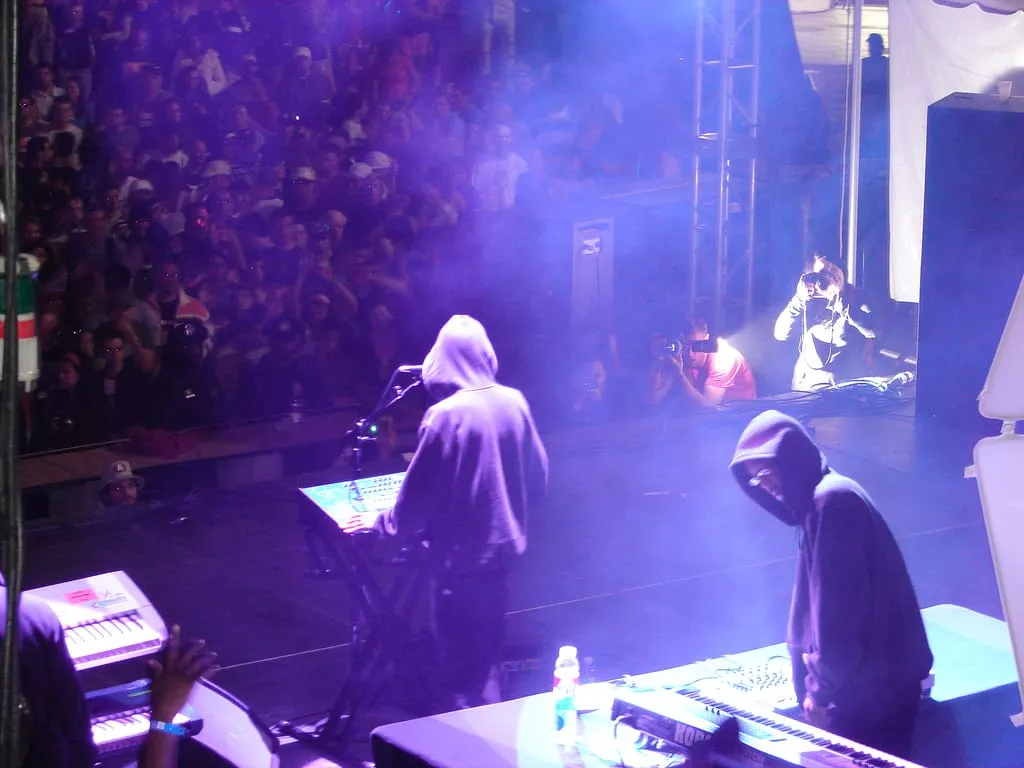
Detroit’s first large electronic music festival took place in 2000 at Hart Plaza. The event created civic scale for music that had often received more institutional recognition overseas than at home. By 2002, a Detroit Historical Society crew was recording performances and interviews for an exhibition on techno.
Those tapes now preserve more than main-stage triumph. They include crowds, volunteers, partial sets, and artists discussing what the genre meant to them. The museum later digitized hours of footage, turning event documentation into a public video archive. 3
Indiana University’s Archives of African American Music and Culture preserves a second record: Denise Dalphond’s field notes, photographs, transcripts, and interviews with Atkins, May, Mike Banks, Anthony Shakir, Theo Parrish, and others. The collection widens the evidence beyond festival commemoration and keeps later participants inside the history. 6
Festival recognition changes a scene. Tourism, sponsorship, permits, and large audiences create opportunities unavailable to a basement party. They also favor a clean origin story that can fit on civic branding. The archive is most valuable when it retains the untidy testimony around that story.
Against the ruin photograph
Detroit techno is routinely illustrated with abandoned factories. The image offers an instant mood and repeats a narrow view of the city as industrial wreckage. It turns residents into atmosphere and makes music seem like a natural emission from ruins.
Belleville High School is a less dramatic photograph and a more precise one. It points to public education, teenage friendship, suburban movement, and the daily space where records were discussed. A drum-machine image is similarly modest: controls, outputs, and buttons whose historical meaning depends on who used them.
The scene’s futurism described agency within Detroit’s conditions. Artists built labels, names, distribution systems, and new sonic identities rather than waiting for the city’s industrial image to define their work.
Detroit techno began through listening across distance: Germany on the radio, Chicago down the highway, Belleville at school, Detroit in clubs and basements, Europe through distribution. Each route left different evidence: a broadcast tape, school memory, label address, club flyer, export pressing, or museum interview. The machines mattered, but their patterns acquired meaning through those exchanges. Records then carried the work far beyond Michigan and local radio.