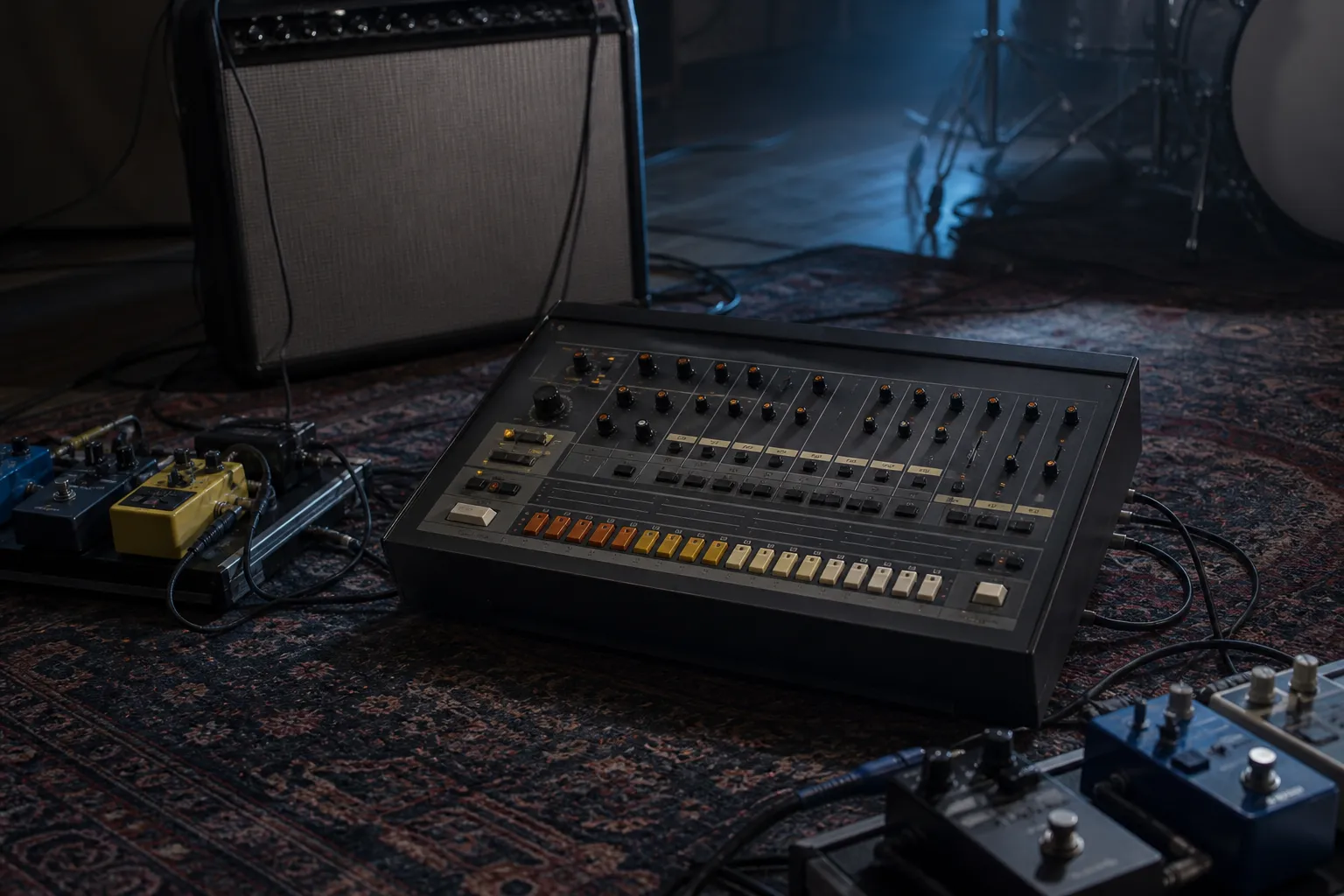


The Sisters of Mercy solved a missing-person problem by inventing a person who was a machine. Every drum device the band used became Doktor Avalanche. The hardware could be replaced; the name stayed on the personnel list. It was a dry joke, but it also described the band’s working method more accurately than treating a drum machine as cheap studio equipment. Doktor Avalanche supplied time, force, limitations, and a public character against which the human players defined themselves. The official band history still calls the Sisters a “rock’n’roll band,” a “pop band,” and an “industrial groove machine”—terms held together by that programmed center. 1
Technology did not make musicians unnecessary. Andrew Eldritch, Gary Marx, Craig Adams, Ben Gunn, and the guitarists and programmers who followed had to write for a pulse that did not listen back. They had to decide how much repetition a song could bear, where a fill belonged, which instrument would provide motion, and how a performance could remain physical when its drummer had no arms. Those decisions made early Sisters records sound less like demonstrations of a gadget than complete arguments about a band.
Naming the constraint
The group formed in Leeds in 1980 around Eldritch and Marx. On the first single, “The Damage Done,” roles were not yet fixed; the record documents a beginning rather than a finished blueprint. Soon the drum machine became permanent and Eldritch moved toward the voice that would identify the band. Different devices served as Doktor Avalanche over time, but the fiction of one continuous member gave technical turnover a stable place in the mythology. A later interview states the rule plainly: the Sisters have always used a synthesized drum device, and every incarnation carries the same name. 2
Naming mattered because it prevented the machine from appearing neutral. A device chosen only for convenience can be hidden or apologized for. A named member must be arranged around. It receives a credit, occupies stage space, fails at inconvenient moments, and shapes what the other musicians can play. The joke turned a limitation—no human drummer—into authorship.
Early programmable rhythm boxes offered a finite set of sounds and a step-based way of ordering them. Their kick, snare, clap, cymbal, and tom voices did not reproduce the dynamic range of an acoustic kit. Patterns repeated with exactness unless someone programmed change. That exactness could expose weak material. It could also make a small group sound implacably organized.
The Sisters leaned into the second possibility. The beat did not swing around the guitar; guitar and bass learned to act against a hard grid. Small timing differences became more perceptible because the reference stayed fixed. A bass note arriving with the kick felt heavier. A guitar scrape entering between steps felt more abrasive. Silence before the next programmed impact could be measured rather than guessed.
The bass carried the body
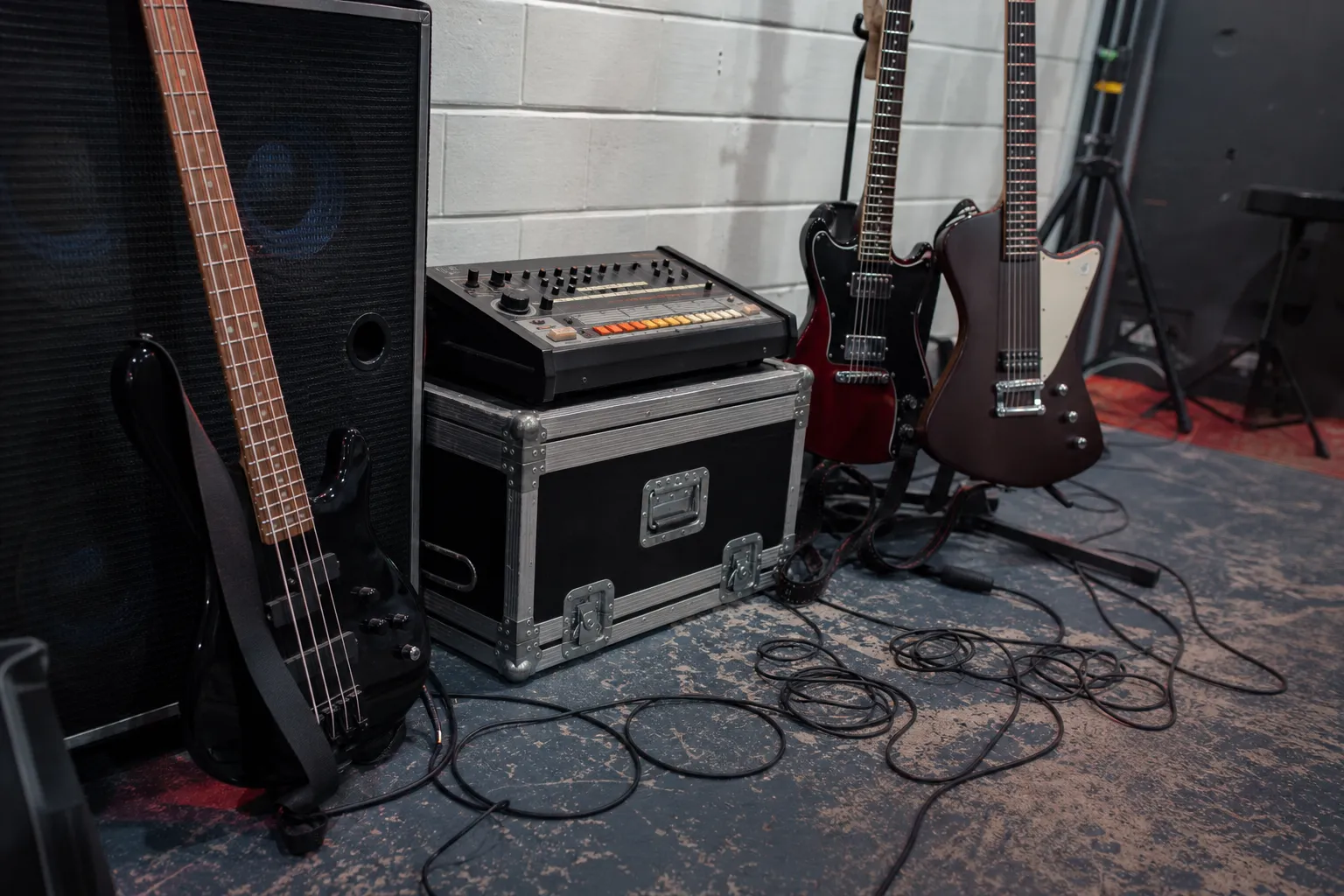
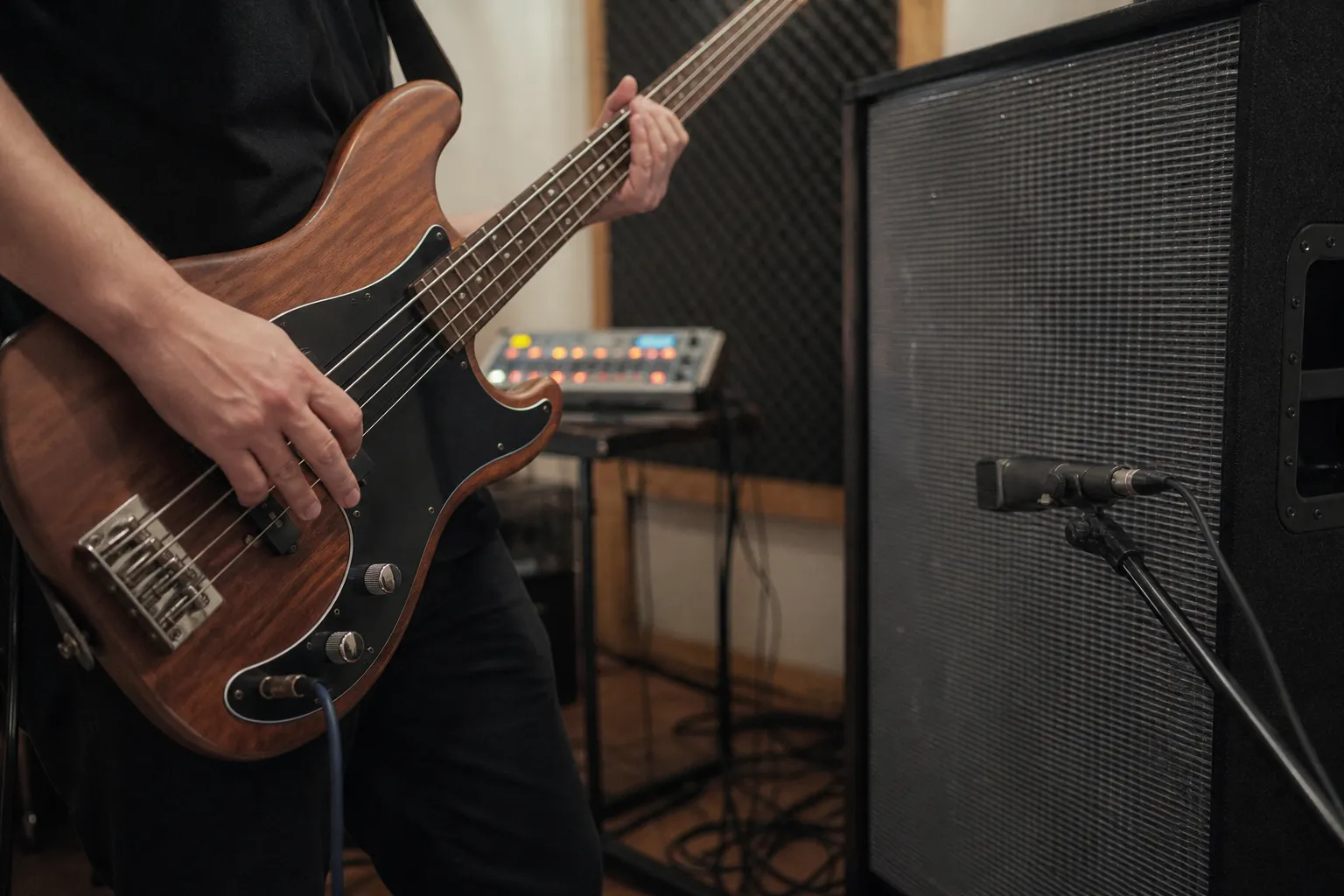
Craig Adams’s bass was crucial to making mechanical rhythm feel bodily. In many rock arrangements, bass reinforces a drummer’s kick while guitars carry the recognizable harmonic information. The Sisters could reverse that hierarchy. The bass might become the song’s weight and memorable movement, while guitars supplied attack, texture, and narrow repeated figures.
This distribution suited early machines. A synthetic kick could be clear without occupying the full low-frequency space of a recorded acoustic kit. Bass could fill that space with sustained or repeated notes. Because Doktor Avalanche did not vary unconsciously, Adams could choose when to lock tightly and when to make a line press against the pattern. The arrangement stayed danceable without borrowing disco’s polish and heavy without depending on metal’s drum spectacle.
Listen to the early singles as arrangements rather than as a sequence leading inevitably to First and Last and Always. “Alice,” “Temple of Love,” and “Body Electric” establish identity through recurrence. Guitar parts arrive as shapes: a clipped figure, a bright line under distortion, a chord held long enough to become atmosphere. The voice does not float above the pulse; Eldritch stretches consonants and vowels across an exact bar, making restraint sound commanding.
This economy is easy to imitate superficially. Set a machine to a blunt pattern, lower the vocal register, add reverb, and the outline appears. What is harder is controlling density. The strongest arrangements leave each element a job. The machine defines duration and impact. Bass supplies mass. One guitar can mark harmony while another introduces noise or counterline. The vocal occupies a deliberate distance from all three.
Recording the machine as sound
A drum machine’s output is only a starting signal. Producer John Ashton recalled that during the “Alice” sessions the group used a newly acquired Roland TR-808 in place of an earlier TR-606. Ashton ran the machine through a public-address system, recorded that amplified sound with microphones, and blended it with the direct signal. The process gave the rhythm additional size and room. 3
“Programmed” did not mean untouched. A dry electrical output could be equalized, compressed, distorted, delayed, sent through speakers, captured by microphones, and combined with room sound. The PA and microphones added distortion, air, and distance before the direct and room signals met in the mix. Each stage changed the apparent distance and weight of the beat. The programmed events remained exact, but their acoustic body could be designed.
The 808 did not simply replace the 606 with a universally “better” machine. It offered another palette and another relationship among sounds. Changing hardware required patterns to be entered, balances reconsidered, and songs tested through whatever amplification a studio or venue supplied. The Doktor name concealed these substitutions just enough to preserve the artistic premise: one relentless member, repeatedly rebuilt.
Live performance made the premise risky. A human drummer can follow a singer who holds a phrase or a guitarist who enters late. A programmed pattern continues. Monitoring has to let musicians hear the grid; the sequence has to begin correctly; transitions have to be prepared. If the machine or its signal path fails, there is no drummer to maintain even a simplified beat.
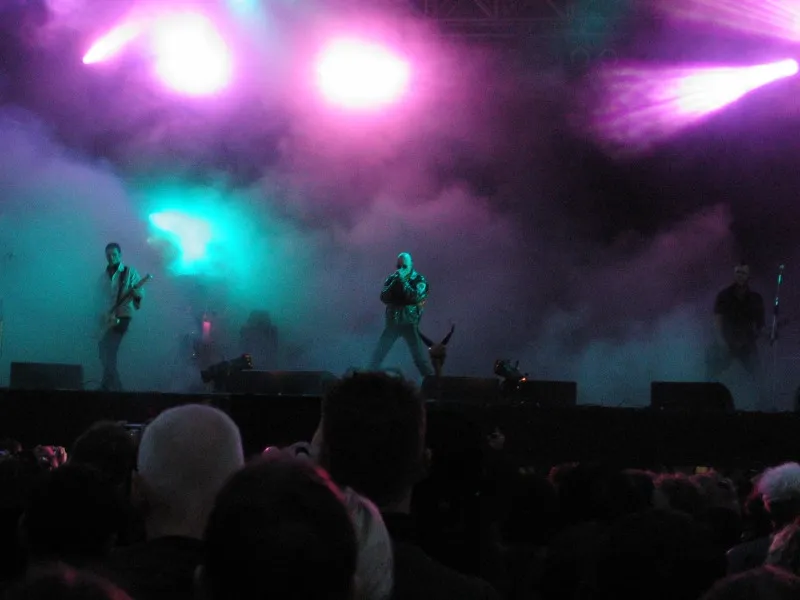
The risk produced discipline. Songs could be structured for reliable starts and stops. Players learned the internal count. The audience saw a band moving through haze and backlight while a pulse arrived from equipment that could be personified but not watched for gestures. That absence shifted visual attention toward Eldritch’s stillness, the guitarists’ positions, and the light itself.
It also changed rehearsal. With an acoustic drummer, a band can discover tempo through collective push and pull. Programming demands that somebody commit to a number and a pattern, then hear whether the song survives it. Faster is not simply more exciting: it shortens vocal space and changes how long guitar resonance can accumulate. Slower is not automatically heavier: gaps may expose a thin sound. Rehearsal becomes a repeated negotiation with an unpersuadable version of the arrangement.
Merciful Release as another machine
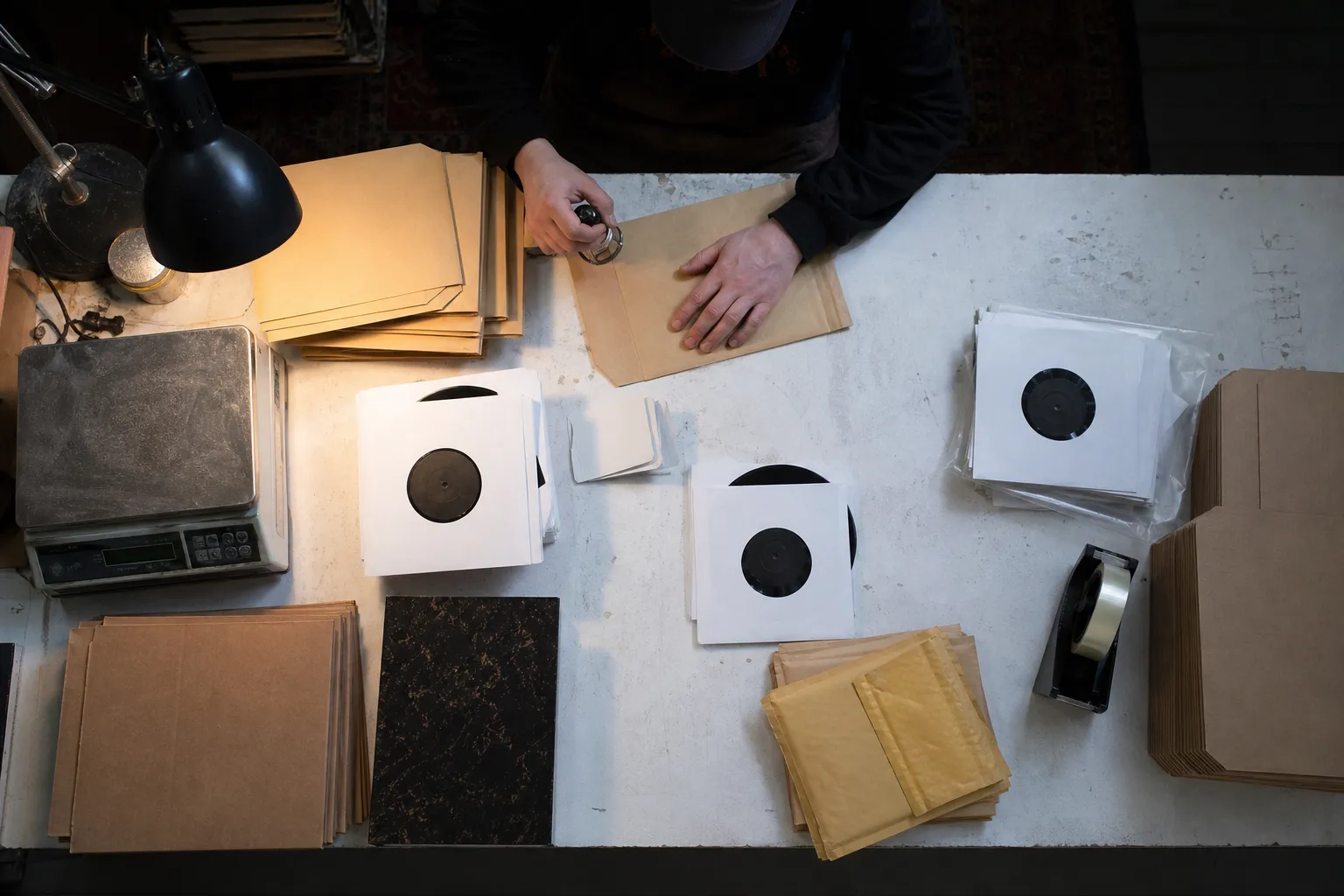
The sound developed alongside a second system: Merciful Release, the label the group used for its records and for releases by associated Leeds bands. A self-released seven-inch required money before it generated any. Recording, mastering, pressing, labels, sleeves, transport, postage, advertising, and unsold stock all had to be managed. The label made a record possible without waiting for an established company to understand the band.
It also linked sound to graphic identity. Merciful Release’s head-and-star mark and the visual consistency of the releases made a small catalog recognizable in shops, mail order, music papers, and fan collections. Like the Doktor fiction, the label converted practical work into a coherent public sign. The group did not merely record songs; it controlled the container through which those songs traveled.
Leeds already possessed a strong post-punk culture of independent organization. The Mekons and Gang of Four offered nearby examples of bands treating production and distribution as part of musical politics and survival. Gary Marx later connected Merciful Release’s support for groups such as the March Violets and Salvation to that local self-help inheritance. 4
The label and drum machine addressed related problems. One reduced dependence on the conventional record industry; the other reduced dependence on finding and rehearsing with a drummer. Neither produced independence in an absolute sense. Pressing plants, studios, distributors, venues, electricity, and specialist equipment remained necessary. But both let a small group decide sooner, learn from a finished object, and reinvest attention in the next release.
That feedback loop favored singles. A seven-inch could test a recording method, a sleeve, a mailing list, and a relationship with shops without requiring the budget of an album. Reviews and live response revealed which part of the identity listeners recognized. The next record could keep the fixed pulse while changing guitar density, vocal distance, or production scale. Merciful Release made development public in increments; Doktor Avalanche gave those increments a continuous rhythmic signature.
A category the band did not need
The Sisters became central to goth’s musical vocabulary, yet Eldritch has consistently resisted the label. Genre names serve audiences, journalists, shops, clubs, and later historians; they do not require an artist’s consent to describe a real pattern of reception. At the same time, accepting “goth” as the band’s intention can flatten the rock, pop, psychedelic, electronic, and hard-rock sources audible in the work.
Doktor Avalanche helps preserve the contradiction. The machine connected the Sisters to post-punk and electronic dance practice, but the arrangements often pursued the scale and force of rock. Their covers—songs associated with the Rolling Stones, Hot Chocolate, the Velvet Underground, and ABBA among them—show a repertoire broader and funnier than a sealed genre identity. The programmed drummer could process those sources without making them identical.
By the time the band made First and Last and Always and later major-label records, its production resources and personnel relationships had changed. The core problem remained recognizable: how to place voice, bass, guitars, and programmed rhythm so that repetition accumulated pressure. The method proved durable enough to survive larger rooms and changing technology.
The member that could be rebuilt
The named machine gave the Sisters’ contribution a visible place in the lineup. They did not discover that an electronic box could keep time. Musicians in disco, synth-pop, post-punk, hip-hop, and experimental music had already made drum machines central for different reasons. The Sisters demonstrated one especially forceful band arrangement: programmed drums as a rigid floor for bass-led weight, separated guitar functions, and a voice that used measured space.
The name Doktor Avalanche kept that arrangement visible. It acknowledged continuity without pretending that the hardware never changed. It made technical labor part of the band’s humor and image. Most importantly, it told players and listeners where to locate agency. The machine did exactly what it was told, but choosing what to tell it—and building every other part around that command—was the music.
On stage, that credit made the absent drummer legible instead of disguising the group as a conventional rock lineup.