

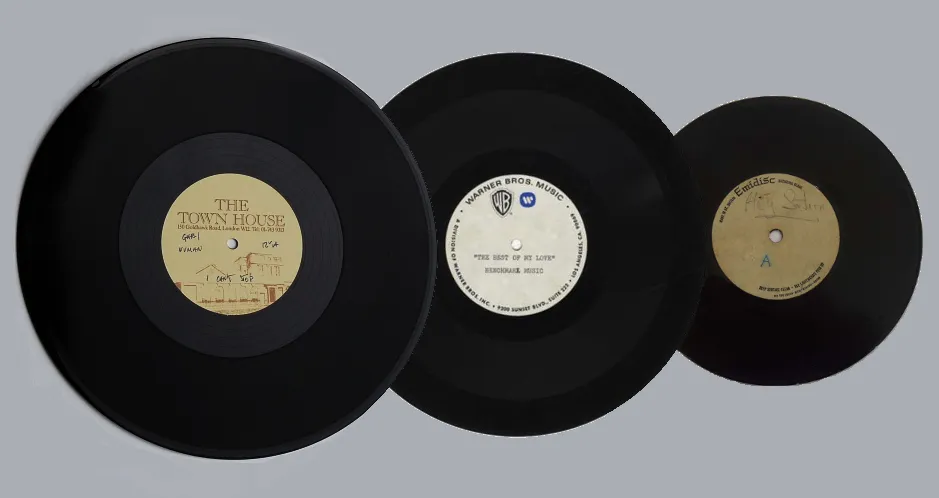
The useful accident happened at a cutting lathe. A long dance mix needed a test copy, and the small blank normally used for a single was unavailable. Mastering engineer José Rodriguez cut the music onto a larger lacquer. Tom Moulton, who had made the mix, thought the few inches of tightly packed audio looked lost on the disc and asked whether the groove could spread outward. Rodriguez explained that filling more of the surface would allow a hotter cut. The larger object was not merely easier to see. It could be louder, with stronger low-frequency presence, and it gave the extended music somewhere to go. 2
Rodriguez’s explanation made level a production choice rather than a mastering afterthought. Moulton could alter the arrangement with the club in mind, then hear a cut whose geometry favored that use. The format did not merely accommodate a longer tape; it let mix length, cutting level, and DJ handling be decided together. The 12-inch became a professional working format before it became a familiar retail category. 2 3
This episode from the early 1970s is routinely told as the birth of the 12-inch single. The standard version is too magical. Neither a spare blank nor one engineer’s cut created the format alone. The record emerged from a chain of people solving different problems: DJs trying to keep dancers moving, mixers extending the useful sections of songs, engineers turning those mixes into playable lacquers, labels circulating small promo runs, and clubs reporting through bodies whether the result worked.
The single was too short
The seven-inch single was built for economy and radio. Its familiar duration suited a song that announced itself quickly, reached a chorus, and cleared space for the next record. A dance floor imposed another clock. A DJ needed time to bring in a track, let a crowd recognize it, work through its peaks, and prepare the transition out. A short fade could arrive just when the room had committed to the groove.
Disco did not invent dancers wanting more time, or DJs using two copies and tape edits to create it. It placed those practices near the center of a growing record business. Clubs made sequencing an art. The DJ was listening not only for songs but for usable entrances, stable percussion, instrumental passages, breakdowns, and exits. Continuous mixing treated several records as one long evening’s structure. 6
Tom Moulton approached records from the dance floor. In accounts of his early work, he describes making long reel-to-reel tapes after watching dancers lose momentum when awkward songs or abrupt changes interrupted their steps. His mixes lengthened instrumental openings, postponed vocals, repeated sections, and clarified transitions. 2 The aim was not duration for its own sake. Extra minutes gave dancers and DJs a more legible arrangement.
An extended mix does more than play a song twice. A good long version redistributes information. Percussion may appear alone so the incoming pulse is easy to align. A bass line can establish the tonal center before the verse. Elements drop away to reduce pressure, then return with enough force to renew the room. The mix becomes an itinerary through intensity.
A floor can answer
The club offered unusually direct product testing. A DJ could receive a lacquer or promotional pressing, play it that night, and observe where dancers entered, cheered, hesitated, or left. This feedback was not a focus group translated into a memo. It arrived in real time through density and motion.
The information was specific to conditions that domestic listening could not reproduce: a powerful system, competing room noise, an audience standing rather than sitting, and records heard in sequence. Bass that seemed sufficient on studio monitors might lose authority in a large room. A breakdown that felt long at a console might create exactly the suspension a crowd needed. Conversely, a clever passage could empty the floor.
DJs became intermediaries between record makers and dancers. Their promotional copies were tools, not souvenirs. Handwritten labels and one-sided discs made it possible to test a mix before manufacturing a full release. If the floor answered favorably, the version might travel to other clubs, radio specialists, and eventually shops. The commercial object followed a smaller social circuit.
The Smithsonian’s account of disco emphasizes that some hits appeared as 12-inch, 45-rpm extended singles precisely to stretch the dance experience and increase DJs’ control. 1 “Extended” and “DJ” were connected functions: the length mattered because someone in the booth could decide how to deploy it.
What the groove can hold
A record stores sound as a continuous spiral. The cutting stylus moves sideways and, depending on the system, vertically in response to the signal. Loud passages and strong low frequencies demand physical room. If adjacent turns of the spiral are too close, they risk interfering with one another. The engineer must balance playing time, level, bass, dynamic range, and the safe distance between grooves. 3
Diameter alone does not guarantee a spectacular record. A 12-inch disc can hold an album side cut quietly, or a single song cut across a broad area. Speed matters too. At 45 rpm, more groove passes the stylus each second than at 33⅓ rpm, improving the conditions under which high-frequency detail can be represented. The format’s advantage comes from how the surface is allocated, not from the numeral printed on the sleeve.
For a dance single, fewer minutes per side can permit wider spacing and a higher level. The cutting engineer still has to manage sibilance, bass phase, peaks, and the limits of playback cartridges. Mastering is not a ceremonial transfer of a finished tape. It is the point where musical decisions become geometry.
The Moulton-Rodriguez lacquer story makes sense because it joins visual and audible space. Spreading the groove was not graphic design. It changed how aggressively the signal could be cut. On a club system, the result could give the kick and bass greater physical authority while raising the record above room noise.
Lacquer before vinyl
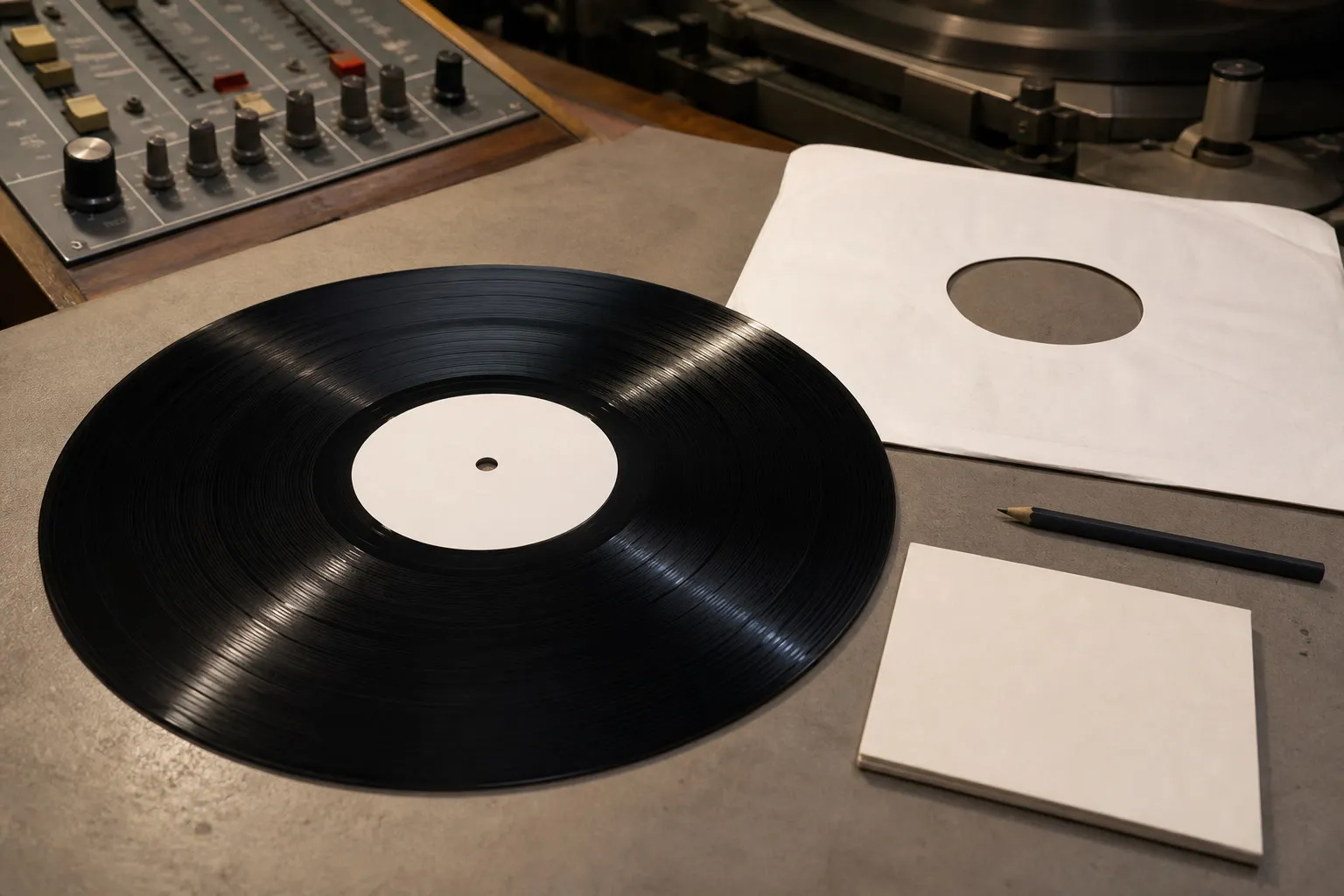
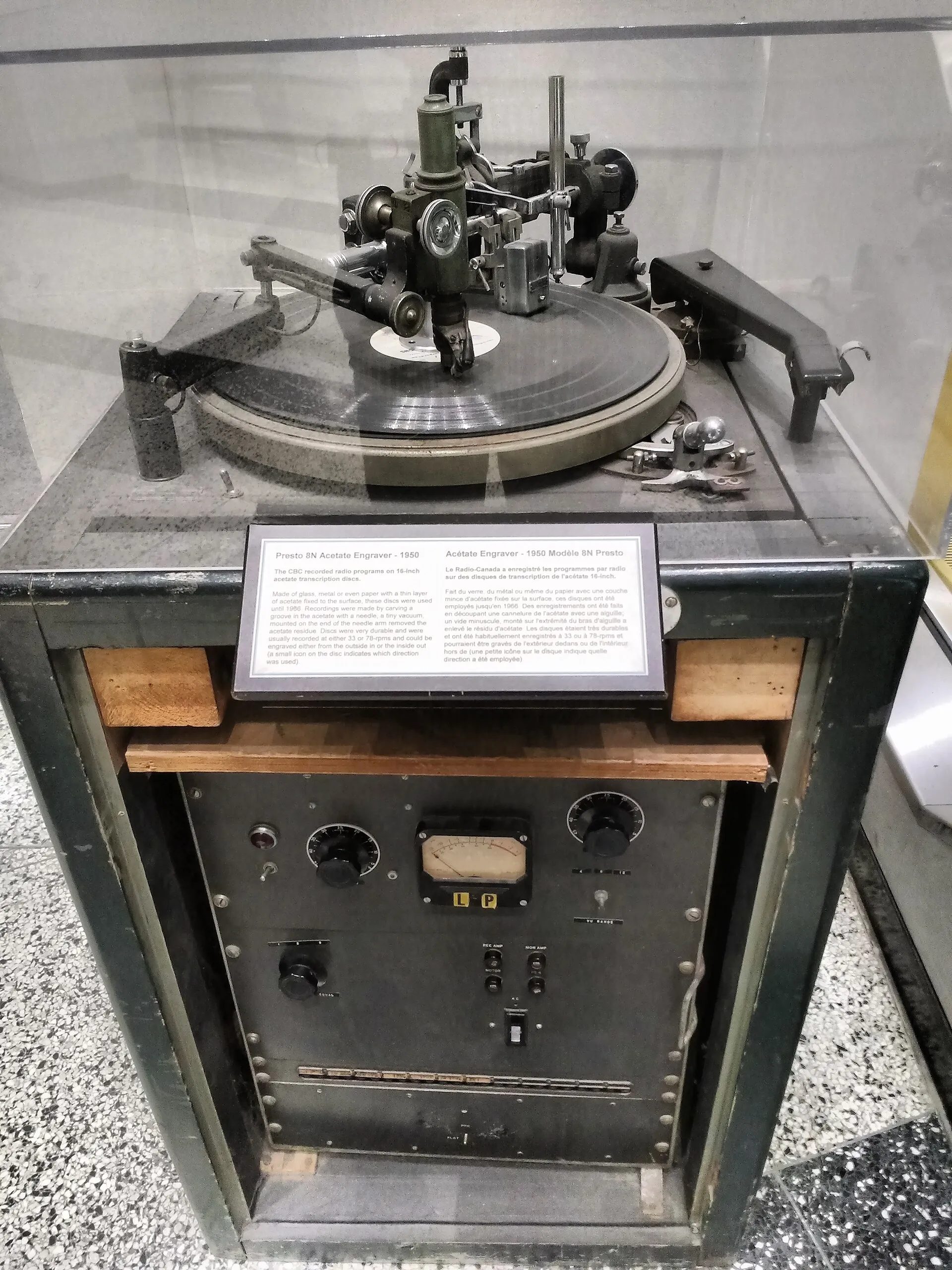
The word “acetate” remains common DJ vocabulary, though professional instantaneous discs are typically lacquer-coated metal rather than solid acetate. These are temporary working objects. A cutting lathe inscribes the modulated groove directly. The disc can be played at once, but each pass wears it. It is suitable for checking, demonstrating, and testing, not for supplying thousands of listeners.
That fragility made the lacquer valuable in a different way from a commercial pressing. It could carry a version that had not yet entered the catalog: a longer edit, a new balance, a one-off mix, or a proposed master. Its blank or typed label recorded the provisional status. The music was finished enough to move a crowd and unfinished enough to change tomorrow.
Once a version was approved, manufacturing required further stages: the lacquer master became the basis for the metal stamper used to press vinyl copies. Cutting guidance describes this division between a playable lacquer and the parts needed for circulation. 4 Disco accelerated the path by placing urgent demand at one end. A club wanted the new version now.
Promotional 12-inches preserved something of the lacquer’s special status while making more copies available. Labels could service DJs with mixes unsuited to ordinary radio length. Plain sleeves and functional labels announced the intended use. The object was large because the sound needed surface, but also because the culture around it valued records as working instruments.
The mix becomes the version
Extending a record changed authorship. The mixer could reveal a rhythm guitarist hidden under the vocal, isolate a percussion break, delay a familiar hook, or create a new dramatic return. None of those moves required writing a new melody. Together they could alter the experience so completely that dancers preferred the 12-inch mix to the album or seven-inch version.
This work helped establish the remix as more than correction. It was an interpretation made from recorded parts. The original song supplied performances and structure; the extended version proposed a different hierarchy among them. Vocals might become one event within a long rhythmic field rather than the continuous center.
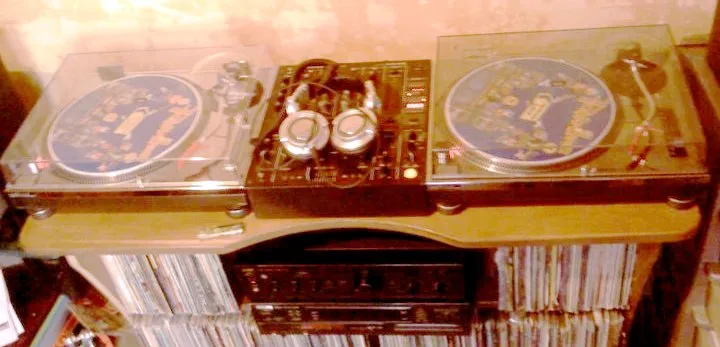
The DJ then interpreted the interpretation. A percussion opening could overlap the outgoing record. A breakdown could be shortened by mixing early or prolonged through another copy. Pitch control changed tempo slightly to make two grooves cooperate. The released disc was fixed, but its place in the night remained open.
Current vinyl guidance still connects 12-inch dance singles to generous groove spacing and the handling needs of DJs who mix and scratch. 5 The format makes a wider ecology tangible. Its form contains assumptions about rooms, systems, transitions, and people who will not listen from the first second to the last in reverent silence.
Not one first
Format histories invite competitions over the first 12-inch disco record: the first lacquer, first promotional pressing, first commercially sold single, or first release at a particular speed. Each category can produce a different answer. The categories are more revealing than a single trophy. They show the format moving from experiment to tool to market.
An accidental larger blank belongs to the experiment. DJ-only copies belong to a professional network. Commercial releases belong to a public format that buyers could recognize. None erases the earlier stage. The 12-inch single matured through repeated use, not a patent-like moment.
The format survived disco’s commercial backlash because the underlying tool remained useful to funk, post-disco, hip-hop, house, techno, reggae, synth-pop, and other club musics. Its mainstream market contracted, but longer arrangements and generous cutting space remained useful. Producers continued to need longer arrangements, engineers continued to value generous cutting space, and DJs continued to need records designed for transitions.
Room as a musical resource
The 12-inch single enlarged two rooms at once. On the disc, it gave the groove more surface and the engineer more options. In the arrangement, it gave rhythm time to develop without racing toward a radio fade. Those freedoms met in the club, where a DJ could make the additional minutes part of a larger sequence.
No component was sufficient by itself. A long mix cut too quietly might fail in the room. A loud record with no useful entrance could resist mixing. A technically excellent promo without DJs willing to test it would remain private. Dancers supplied the final criterion, responding to the combined work without needing to name its stages.
The format therefore records a collaboration among social and mechanical systems. Tape edits changed arrangement; lathes turned level into width; promotional networks moved fresh versions quickly; sound systems made mastering choices physical; dance floors sent judgments back. The groove needed more room because the music had acquired more work to do. Its extra diameter was useful only because an entire practice had learned how to spend that space: on time, level, bass, transitions, and another chance for the room to answer.



.jpg)


