

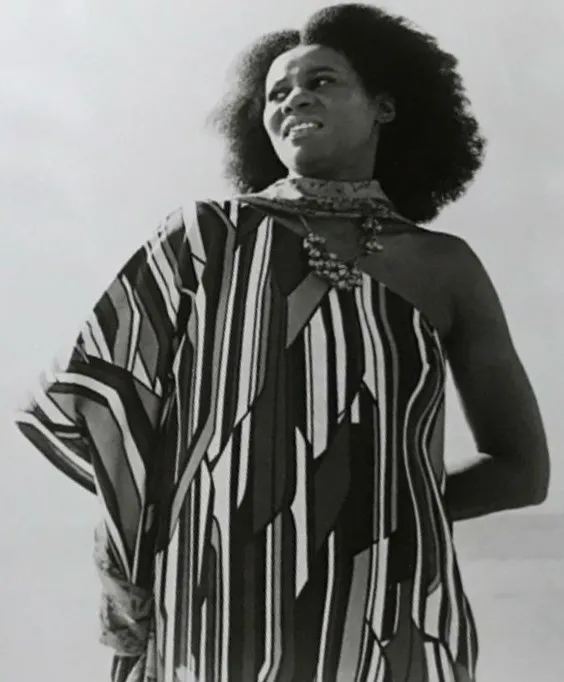
Before Alice Coltrane recorded a harp, she knew how to make an organ move a room. In Detroit she played piano and organ in church, studied the city’s modern jazz language, and worked in clubs. Her later instruments were not containers for atmosphere. The sustained organ chord and the sweeping harp glissando can sound weightless on a casual listen. In her hands, both belong to a practice built from touch, repetition, register, and ensemble timing.
Coltrane’s career is still too often arranged around a marriage. John Coltrane was her partner, musical collaborator, and the leader of the group she joined in 1966. His death in 1967 was a profound personal and professional rupture. But “widow” cannot explain the sequence of decisions that followed: leading sessions under her own name, writing for unusual combinations, placing harp against bass and percussion, expanding ensembles with strings and voices, establishing a spiritual community, and recording music for that community on cassette.
Those decisions did not trace a retreat from musical rigor into a vague spiritual realm. They changed the site and purpose of the work while retaining concrete concerns: how a pulse is carried, how timbres share register, how an ensemble supports attention, and how recordings reach listeners. Her official archive places Detroit church music, jazz study, professional performance, spiritual practice, and the Vedantic Center in one biography. 1 The links are audible if the instruments are treated as tools rather than symbols.
The organ before the aura
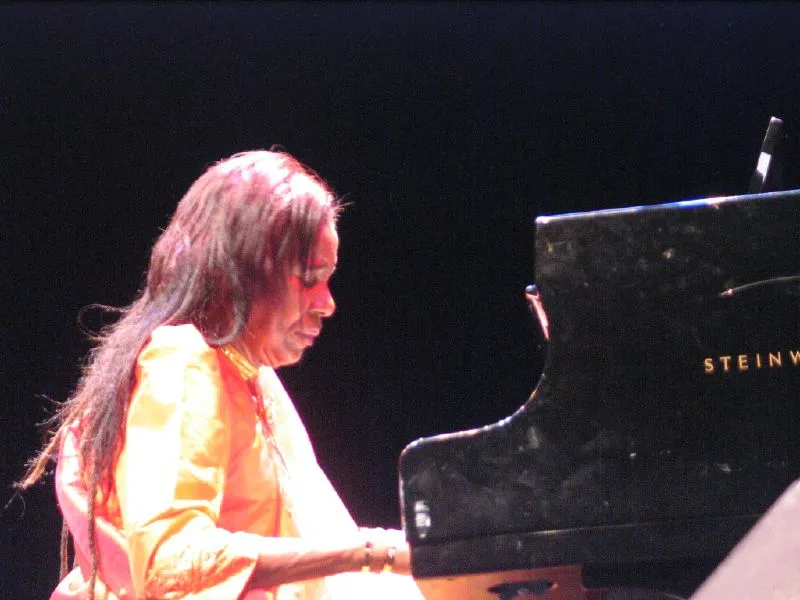
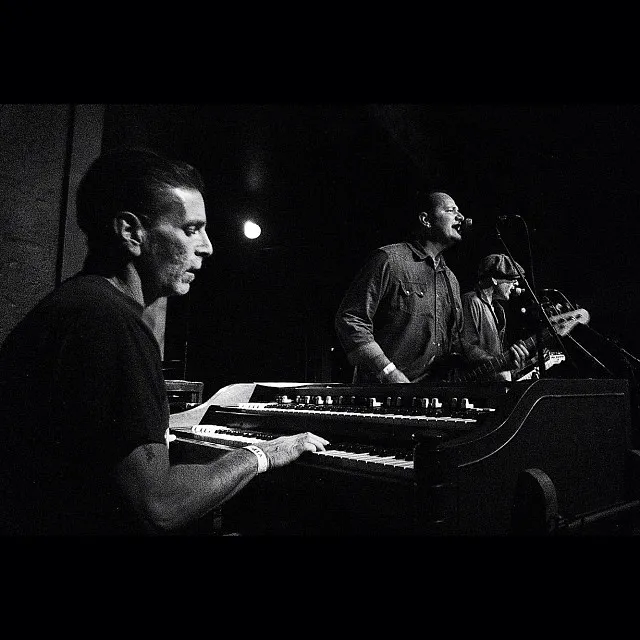
An organ can sustain a tone after the fingers have struck it, but the player still has to shape time. Drawbars change the harmonic profile. The swell pedal controls dynamic pressure. Hands can divide between held harmony and quick lines; feet add another layer. A rotary speaker makes sustained material move physically through the room. Coltrane’s organ playing uses these resources to produce density without surrendering rhythmic definition.
Detroit supplied several kinds of schooling at once. Her church experience taught her how accompaniment supports collective singing and how repetition can gather force. Jazz work demanded harmonic command, responsiveness, and the ability to place a phrase against a rhythm section. Study in Paris with Bud Powell added another route into bebop practice. None of these experiences predicts every later recording, but together they make the organ’s role intelligible. It can preach, propel, cushion, and disturb within the same performance.
On her early records as a leader, piano remains central. A Monastic Trio and Huntington Ashram Monastery establish a language in which compact ensembles can open large harmonic spaces. The titles announce spiritual inquiry, yet the music does not run on titles. Bass ostinatos, cymbal placement, piano attack, and the duration of a repeated figure do the work.
Learning what a harp can push
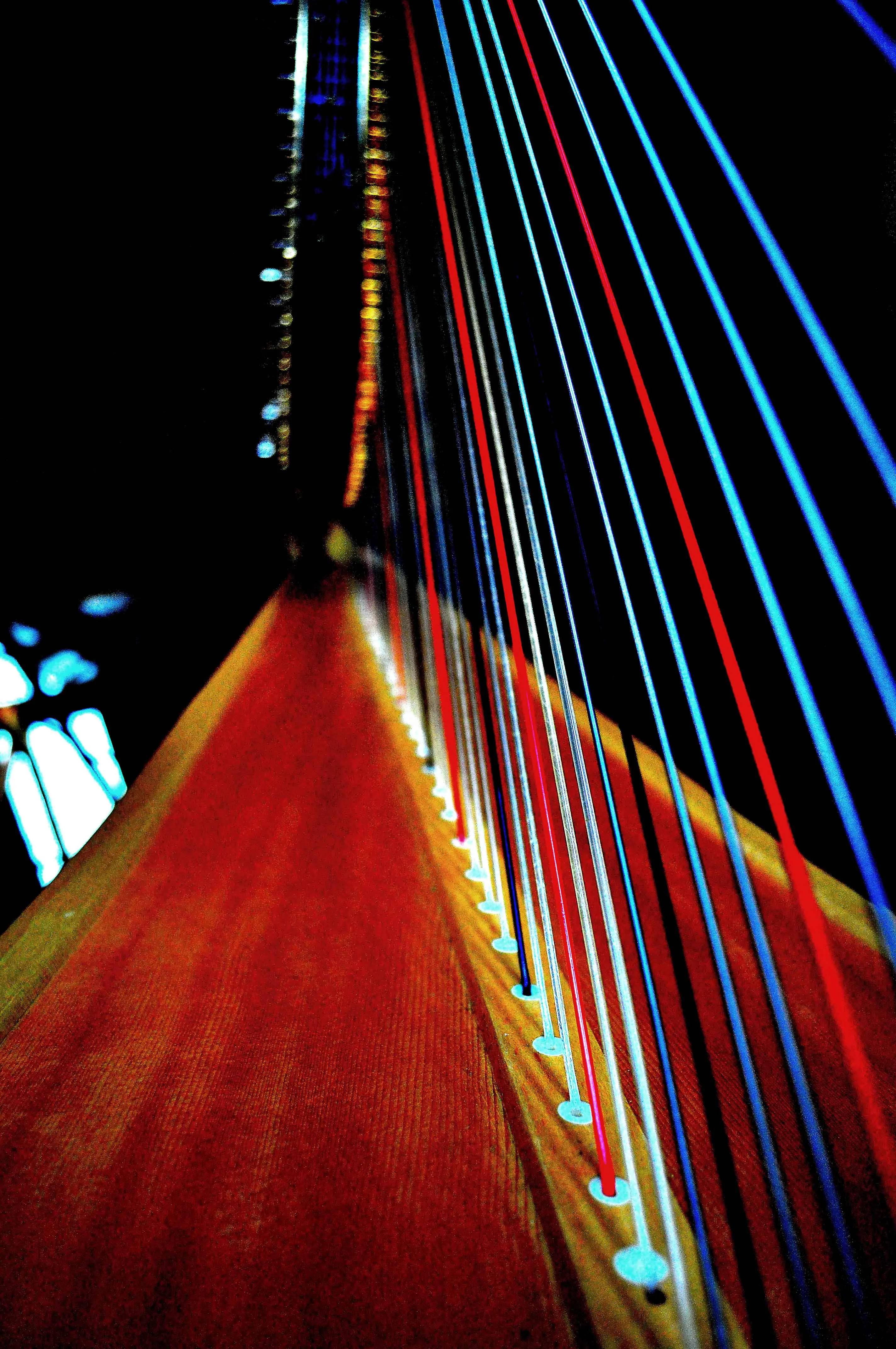
The concert harp brought a different mechanism. Its strings decay after they are plucked, and its pedals alter pitch classes across registers. The instrument can state a single dry note, roll a chord, repeat a pattern, puncture an ensemble, or release a field of resonance. Coltrane used that range. Reducing her harp to glissandi misses the short attacks and recurring cells that keep the music in motion.
Journey in Satchidananda, recorded in 1970, makes the point with unusual clarity. The documented personnel join Coltrane’s harp and piano to Pharoah Sanders’s soprano saxophone, Vishnu Wood’s oud, Cecil McBee or Charlie Haden on bass, Rashied Ali on drums, and Tulsi on tamboura. 2 These instruments do not melt into one generalized “Eastern” color. Tamboura establishes a continuous drone. Bass figures define a repeating ground. Oud and harp articulate separate attacks. Drums and percussion organize weight. Sanders’s soprano line enters a texture whose motion was already specific.
The harp can participate in that ground rather than hover above it. A repeated pluck affirms meter while its resonance crosses the next beat. A rolled figure passes energy through several registers. A low string can answer the bass instead of decorating the melody. Because the note blooms and fades, Coltrane has to decide how much space to leave around the next attack. Rhythm resides in the decay as well as the strike.
Her instrumental choice also shifted expectations inside jazz. The harp carried associations with the European orchestra, salon, and celestial cliché. Dorothy Ashby had already demonstrated that it could swing and improvise as a modern jazz voice. Coltrane pursued another set of ensemble possibilities. She did not need to disguise the harp as a piano. Its unequal registers, pedals, resonance, and physical sweep could reorganize the group around it.
Writing beyond the small group
The next expansion was orchestral. Records including Universal Consciousness and World Galaxy place keyboards and harp among strings, reeds, rhythm sections, and voices. Large forces can invite indiscriminate praise—“cosmic,” “lush,” “transcendent”— that says little about composition. Coltrane’s achievement is easier to hear by asking who carries which function.
Strings may sustain a harmonic mass while bass repeats a narrow figure. Voices can state text, double a contour, or act as a choir with its own attack and breath. Organ fills a middle register that neither the strings nor percussion occupies in the same way. Harp crosses boundaries: it can belong to the orchestral color, mark a rhythmic cycle, or cut through the arrangement as a solo voice. The score is not large merely because its subject is large. Scale lets Coltrane distribute related motions across different bodies.
That distribution also changes leadership. The bandleader is not only the most audible improviser. She chooses personnel, writes or directs parts, determines the length and sequence of sections, and shapes the recording into an album. Coltrane’s authorship is present in those allocations. The official archive makes plain how quickly her catalog developed across labels and changing configurations after 1968. 1
Practice becomes a community schedule
In the 1970s, Coltrane’s spiritual study led to the founding of the Vedantic Center and later Sai Anantam Ashram in California. She became known as Swamini Turiyasangitananda. These facts are sometimes used as permission to stop describing the music precisely, as though a new name dissolved technique. Inside the community, music now had specific daily musical work to do.
Devotional songs support repeated participation. Text has to be singable by people whose function is not that of a studio chorus hired for polish. Harmonium, organ, synthesizer, percussion, and voices establish cycles that can continue without a jazz solo determining the form. Call and response turns listening into contribution. A melody may return many times because return is the practice, not because the composer has run out of development.
Coltrane’s jazz knowledge did not vanish in this setting. Her chord voicings still control tension and release. Registration still determines whether the organ supports or overwhelms voices. Rhythmic placement still decides whether repetition gathers momentum. What changes is the contract with the room. The music is made with and for a congregation, tied to services and shared discipline.
In a 2025 Hammer Museum oral history, Michelle Coltrane recalls her mother playing organ while family members and other initiated students sang bhajans, evidence of music functioning as shared practice rather than private atmosphere. 4
The cassette is part of the arrangement
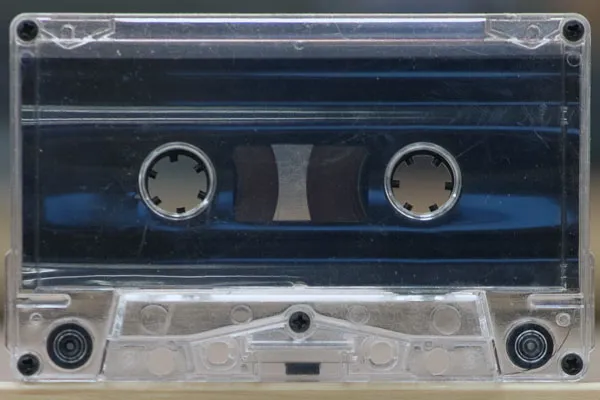
Between 1983 and 1995, recordings from the ashram circulated primarily on cassette. The later compilation World Spirituality Classics 1 brought selections from those tapes to a much broader audience. The archive’s account emphasizes that this was music originally produced and distributed within the spiritual community. 3
A 2017 account of the reissue likewise describes four cassette releases made for the ashram’s worshippers, independently supporting the community-centered purpose of their original circulation. 5
Cassette is not a neutral footnote. Compared with a nationally marketed LP, a small-run tape can be recorded, duplicated, labeled, and passed directly among participants with modest equipment. Its sides impose durations. Copies accumulate hiss and mechanical variation. Inserts and handwritten labels carry local information. Distribution can follow relationships rather than retail territories.
That practical intimacy suits the music’s setting, but it should not be romanticized. Small circulation can also make work difficult to document and easy for outsiders to misunderstand. The tapes were not secret evidence of an artist disappearing. They were functional recordings in an active community, made during decades when Coltrane’s public jazz discography had slowed. Their later reissue changed the audience and the frame, not the circumstances of their creation.
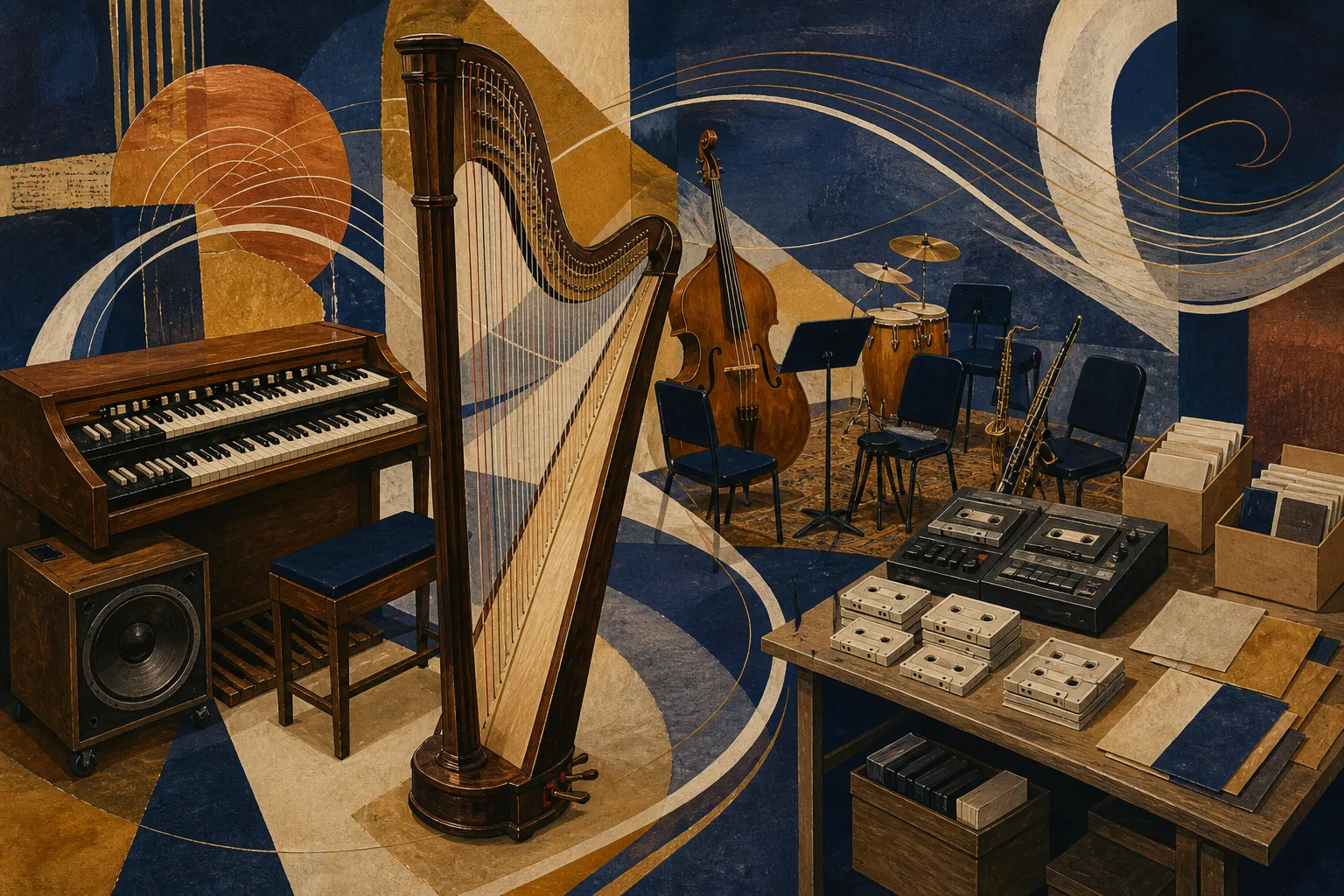
Cassette shaped the work alongside harp and organ. Each medium sets possibilities and limits. Harp determines attack and decay. Organ determines sustain and registration. Ensemble size determines how musical labor is divided. Cassette determines how a performance can be fixed, copied, sequenced, and delivered. Coltrane composed through all four levels.
Hearing continuity without flattening change
Harp, drone, oud, tamboura, and Sanskrit devotional text are sometimes gathered under one loose label, “Eastern,” that erases the different histories Coltrane studied and the different functions the sounds perform. Naming an instrument does not prove that its tradition has been understood; refusing to name it is no improvement. The documented personnel of Journey in Satchidananda are more specific: particular musicians bring particular techniques into an ensemble directed by Coltrane.
Spiritual commitment neither excuses vague description nor reduces belief to style. Coltrane’s Vedantic study affected titles, texts, daily practice, institutional life, and the people for whom later music was made. Those consequences are observable. Private experiences of transcendence are not; the evidence shows how belief organized musical choices and community work.
The phases do not sound the same. The compact intensity of her early trios, the layered orchestral records, and the congregational tapes answer different situations. No single spiritual idea explains every musical choice. Her practice changed because her life, collaborators, resources, and communities changed.
Continuity lies in method. Coltrane repeatedly builds a stable field—a drone, ostinato, chord cycle, repeated text, or sustained registration—and then alters how energy moves inside it. The harp’s plucked pattern can make a drone pulse. The organ can turn held harmony into rotating pressure. Strings can widen a piano voicing into an environment. A congregation can carry a refrain beyond the authority of one soloist. A cassette can carry that collective act to someone absent from the room.
That method says more than calling the music mystical or making John Coltrane the measure of every decision. Alice Coltrane was a bandleader, composer, arranger, keyboard player, harpist, spiritual teacher, and recording producer. Those roles overlapped without becoming interchangeable. Her importance rests in how carefully she made them cooperate.
Listen again to the harp and the supposed cloud acquires edges. Fingers strike strings; notes decay against a bass figure; another attack arrives at a chosen instant. The instrument carries pulse precisely because it cannot hold sound forever. Around it, organ, ensemble, voices, room, and recording medium carry other parts of the work. What can seem like atmosphere from a distance is, up close, an arrangement of labor in time.


.jpg)

