The name makes the New Wave of British Heavy Metal sound centralized: one nation, one moment, one musical advance. The records tell a less orderly story. A band from Sheffield could press its own EP; a DJ in northwest London could add a demo to a request chart; a Newcastle studio could become a label; a weekly paper could print names that had never shared a bill. “NWOBHM” made these activities visible together. It did not prove that the bands sounded alike. The new wave was a network before it was a genre, and its connections were built from cheap, physical media. 1
A disco with an incoming mail pile
From the mid-1970s, DJ Neal Kay ran the Bandwagon Heavy Metal Soundhouse in the back room of the Prince of Wales pub in Kingsbury. It was a disco rather than a standard concert venue. Recorded music was the main event, which meant an unsigned band could enter the room on cassette. Kay played established hard rock alongside demos, watched the response, and compiled a request chart. That chart turned local enthusiasm into information that could travel. 2
The Soundhouse is often called the birthplace of NWOBHM, but “switchboard” is more accurate. Bands already existed elsewhere. Working musicians were writing, rehearsing, and taking whatever regional bookings they could find. Kay offered a point at which their recordings could be compared in public. A tape sent from outside London could earn repeat plays, a chart position, a mention in print, and perhaps a place on a bill. Each step increased the chance of the next without guaranteeing it.
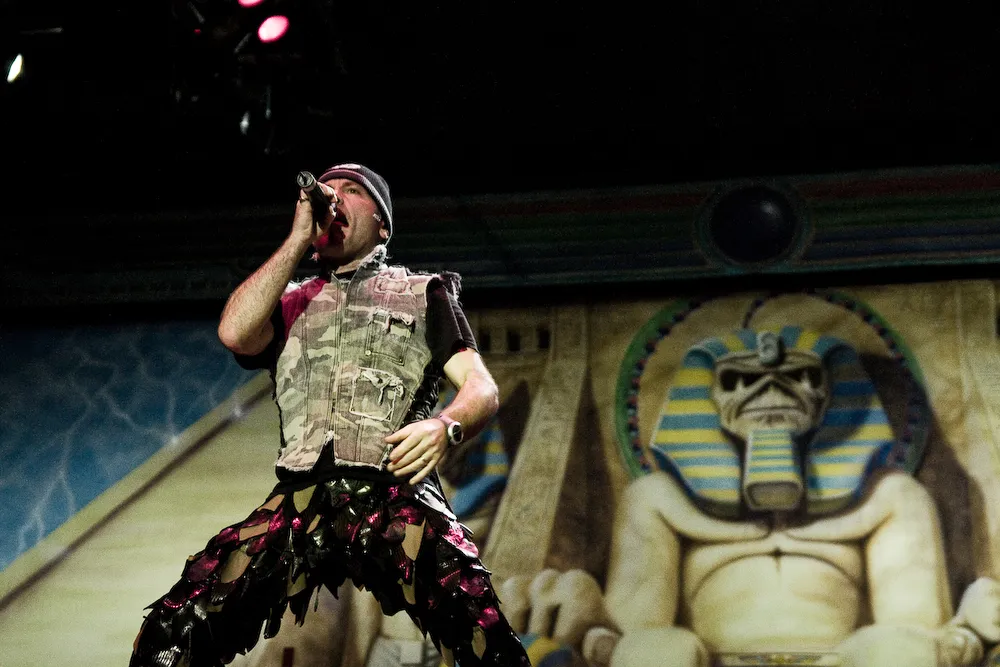
Iron Maiden’s route through the room became the best-known example. The band recorded a four-song demo at Spaceward Studios in Cambridge at the end of 1978 and got a copy to Kay. “Prowler” drew a strong response. Three tracks were issued in November 1979 as The Soundhouse Tapes, sold directly in a limited run. Its title credited the place where a cassette had acquired an audience. The EP was not simply a primitive version of a later EMI product. It was evidence that recording, club response, and mail order could form a release system. 3
Sounds supplies a shared page
Music weekly Sounds gave that system national visibility. Writer Geoff Barton covered the Soundhouse and emerging bands; the paper printed Kay’s chart and reports from shows. In May 1979, the “new wave of British heavy metal” wording appeared around Barton’s coverage. Participants later disagreed over who precisely coined the phrase and how seriously it was intended. The important result is easier to establish: a headline joined scattered activity into a named subject that could receive more coverage. 4
Newsprint shortened distance. A reader could discover that an unsigned band had made a single, copy an address, send cash or a postal order, and receive the record. Bands could see which venues, studios, and labels were handling adjacent music. Promoters could book several acts under a phrase that audiences now recognized. The paper did not neutrally document a completed movement. Its repetition helped produce the movement’s boundaries.
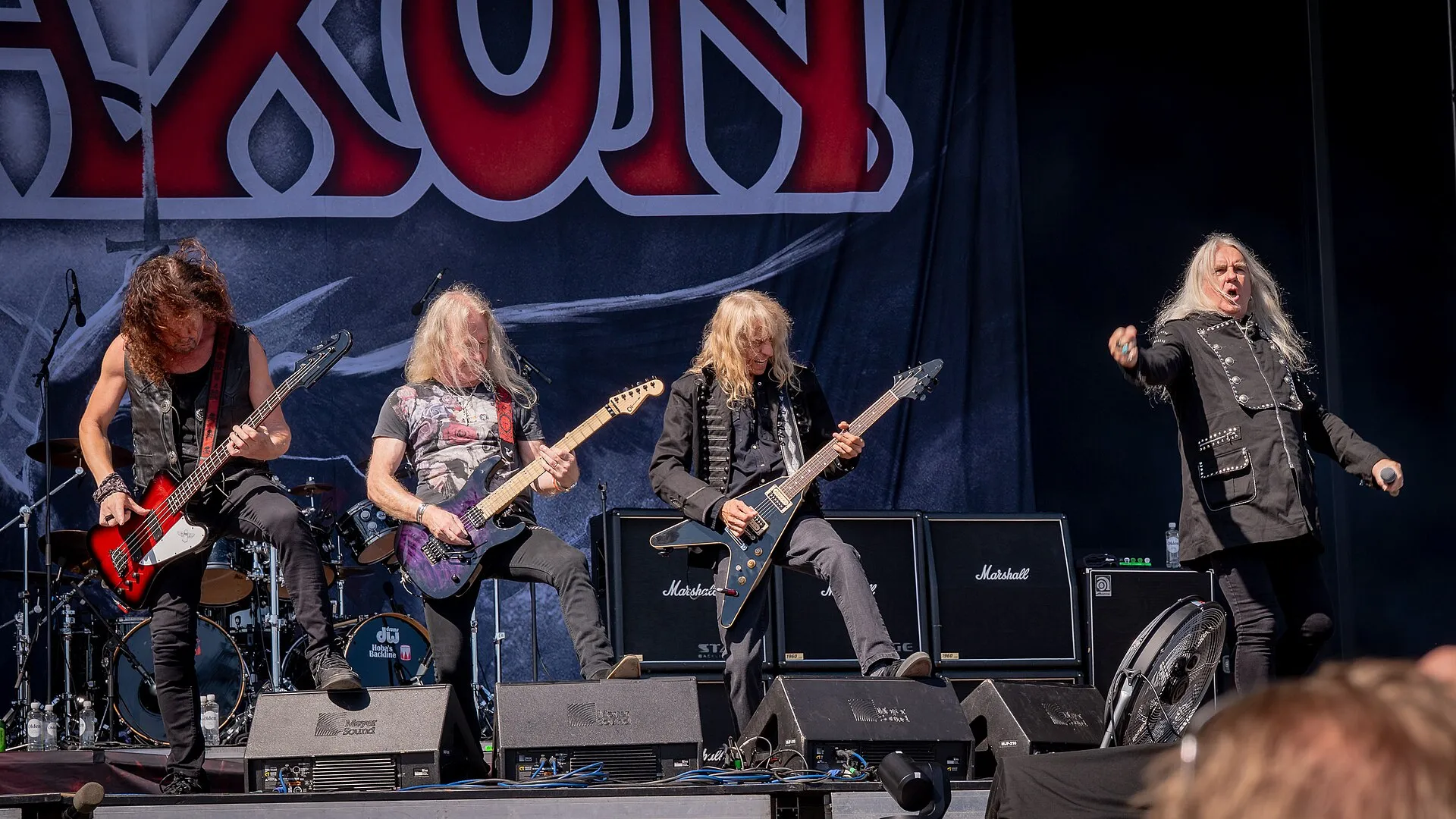
Those boundaries stayed porous. Def Leppard pursued tight songs and increasingly polished production. Venom’s recordings were abrasive and occult. Diamond Head used long arrangements; Girlschool brought glam and punk economy; Saxon wrote about roads, machines, crowds, and working-band life. Iron Maiden joined galloping bass figures, twin-guitar lines, and abrupt sectional changes. Treating these differences as exceptions misses the point. NWOBHM initially described a surge in access and activity, not a strict rulebook.
Regional rooms, regional costs
London mattered because national media and labels were concentrated there, but the scene’s labor was distributed. Saxon came from South Yorkshire. Def Leppard formed in Sheffield. The Tygers of Pan Tang developed around Whitley Bay. Raven and Venom were connected to the northeast. Diamond Head worked from the Midlands. Their routes included pubs, civic halls, colleges, clubs, and support slots, often far from the Soundhouse.
Regional difference affected what a band could afford. Travel consumed wages. A local studio might offer one night rather than a week. Pressing a thousand singles required money before sales. Covers, labels, and advertisements had to be arranged. A manager could be a friend with a telephone; a label could begin as a studio owner deciding to release one client. Histories of the wave’s independent streak recover geographically dispersed groups issuing demos and one-off singles. Most did not become album acts. Their small releases are not marginal debris around the famous bands. They are the scale on which the network operated. 5
Neat Records grew from Impulse Studios in Wallsend and became a durable northeast node. Its catalog put Raven, Venom, Tygers of Pan Tang, and many smaller bands into circulation. Other independent labels and compilations performed similar work. Centralization would have required a company choosing which local groups counted. Instead, many imperfect filters overlapped: a studio, a DJ, a shop, a fanzine, a weekly paper, a radio producer, and the person answering mail.
The single as application and product
For an unsigned band, a recording had several jobs. It could secure a gig, persuade a writer, enter a radio program, attract a label, or be sold directly. The same three songs might exist as a cassette demo and a privately pressed EP. Sound quality varied because budget and access varied. Rawness was sometimes aesthetic preference, but it was also the audible limit of paid studio time.
Def Leppard financed its 1979 EP before a major-label deal. Iron Maiden formed Rock Hard Records for The Soundhouse Tapes. Independent singles from bands such as Diamond Head, Witchfynde, and Sledgehammer moved through shops and mail. The practice owed something to punk’s demonstrated DIY routes even where metal fans defined themselves against punk style. Record Collector’s history identifies that shared method: self-release first, industry attention later if it came at all. 6
Scarcity also produced distortions in the archive. A run of one thousand that sold at gigs can become an expensive collectible, making today’s surviving object seem more deliberate or prestigious than it was. A cassette copied repeatedly may leave no stable master. A band covered in a local zine may disappear from national histories because libraries did not preserve the issue. The network was productive partly because it was informal; that informality makes it difficult to reconstruct.
Mail order made that informality operational. An advertisement or review supplied an address; the buyer enclosed payment and waited while someone close to the band packed the record. There was no automatic inventory, tracking page, or instant correction if a postcode was wrong. Delays could reflect a sold-out pressing, a new batch of sleeves, a tour, or one overwhelmed household. Trust crossed in both directions: listeners sent money to strangers, while bands posted scarce stock before every payment had fully cleared.
This small administration affected which music traveled. A group with a reliable correspondent, legible advertisement, and enough cash to reorder could appear more active than an equally strong group whose members were working shifts or sharing an unstable address. DIY access removed some industry gates and exposed other unequal resources. Time, literacy, storage, transport, and family support all mattered. The romance of “doing it yourself” should not turn unpaid logistics into invisible magic.
Fanzines and the labor of selection
Fanzines extended the conversation beyond weekly press. Their editors reviewed demos, printed interviews conducted by mail, listed contacts, and traded issues with other editors. Layout could be made with typewriters, handwriting, scissors, and a copier. The technical threshold was low, but the labor was real. Someone had to listen, write, duplicate, collate, address, and post.
These publications did more than promote. They argued over authenticity, musicianship, punk, commercial ambition, and which new record deserved attention. The scene’s values were built through those disagreements. A band could be too polished for one reader and finally competent enough for another. Def Leppard’s later distance from the NWOBHM label shows how a useful access category could become a restrictive identity.
The surviving public image is also overwhelmingly male and white. Girlschool’s success, female fans’ labor, and women working in shops, offices, photography, and publishing do not cancel that imbalance. They show why a history made only from band lineups is incomplete. Fanzine letters and photographs can recover some participation, but archives reproduce the selection habits of the original press. Asking who could enter a room, afford a record, or be treated as a serious musician belongs beside the catalog numbers.
Radio added another selective layer. BBC Radio 1’s Friday Rock Show could place an unsigned or newly signed band before a national audience, while local programs supported nearby scenes. Airplay did not replace mail and gigs; it increased the number of listeners who might use them. The Guardian oral history gives Kay, Barton, Tommy Vance, and producer Tony Wilson distinct roles. No single gatekeeper “broke” the movement. Several gates opened onto each other. 7
Three successes do not contain the wave
Iron Maiden, Saxon, and Def Leppard provide clear examples because their careers left large archives. They should not become the only plot. Maiden demonstrates how a demo, club chart, self-release, relentless gigs, compilation, and label deal could form a sequence. Saxon shows a regional band turning road experience into songs and using press attention to enlarge its circuit. Def Leppard shows that the network could launch musicians whose production goals soon exceeded the scene’s preferred rawness.
The less successful records reveal just as much. One single might be a band’s entire public catalog. Its existence shows access to a room, a recorder, a pressing plant, and a few outlets. Oxford’s account of NWOBHM stresses that demos and independent releases circulated because dedicated venues and early major-label support were limited. The constraint shaped the medium. 8
By 1981, labels and specialist magazines were turning the surge into a recognizable market. Kerrang! began as a Sounds supplement and became its own publication. Successful bands entered international touring and professional production. The network did not vanish, but the balance changed. What had connected unsigned groups could now classify products.
That commercial turn also changed listening backward. Once Iron Maiden filled arenas, an old demo could be heard as the inevitable beginning of an arena band. At the time, it competed with many tapes whose futures were unknowable. Charts and reviews record attention, not destiny. Restoring that uncertainty is essential if NWOBHM is to remain a scene history rather than a shortlist of winners. It also returns agency to listeners whose purchases made a chart before any label could present the result as market research.
NWOBHM’s most transferable contribution was therefore infrastructural. A scene could be assembled from addresses, charts, photocopies, small pressings, and people willing to treat a rough tape as public music. The famous bands used that infrastructure exceptionally well. They did not build it alone.