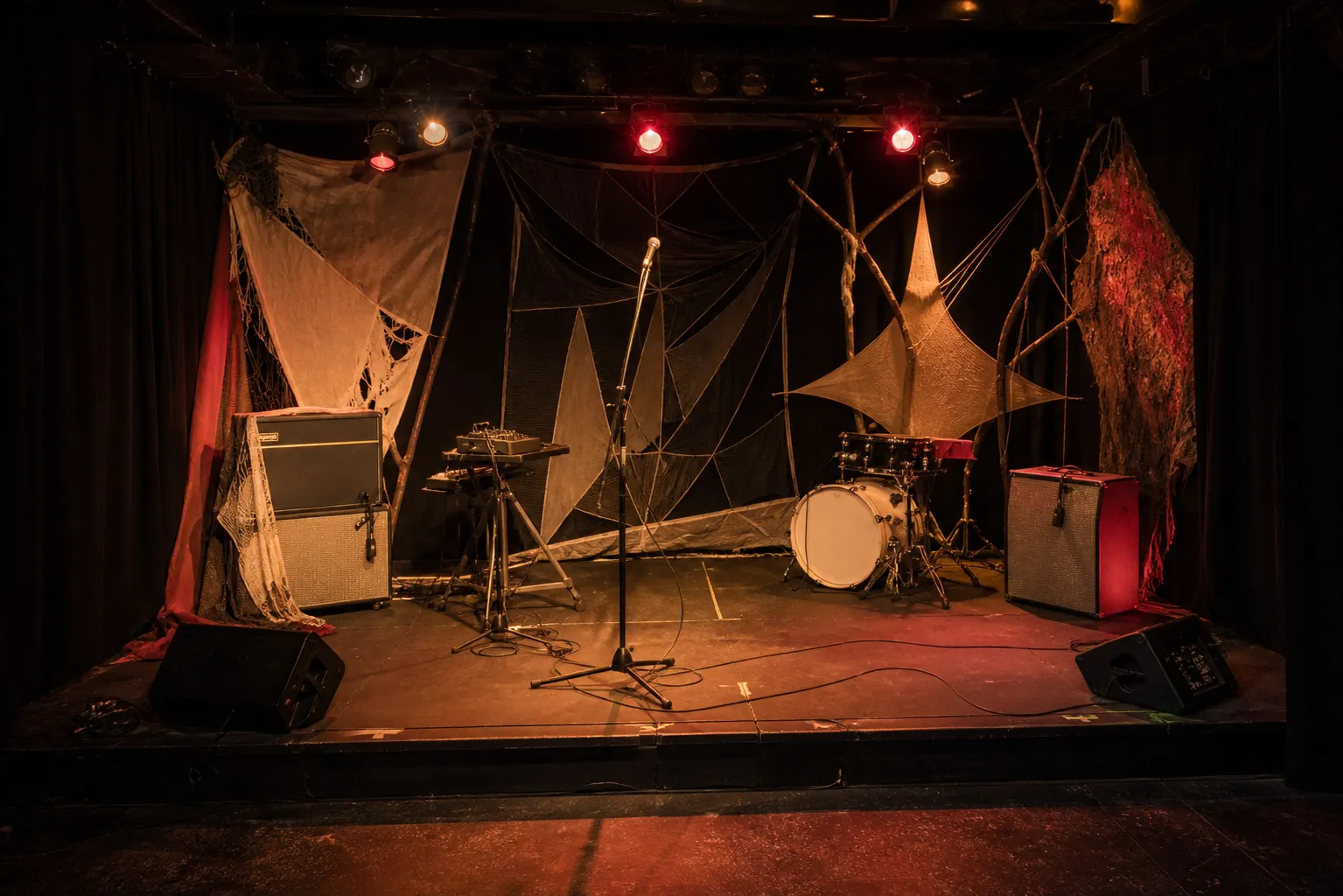

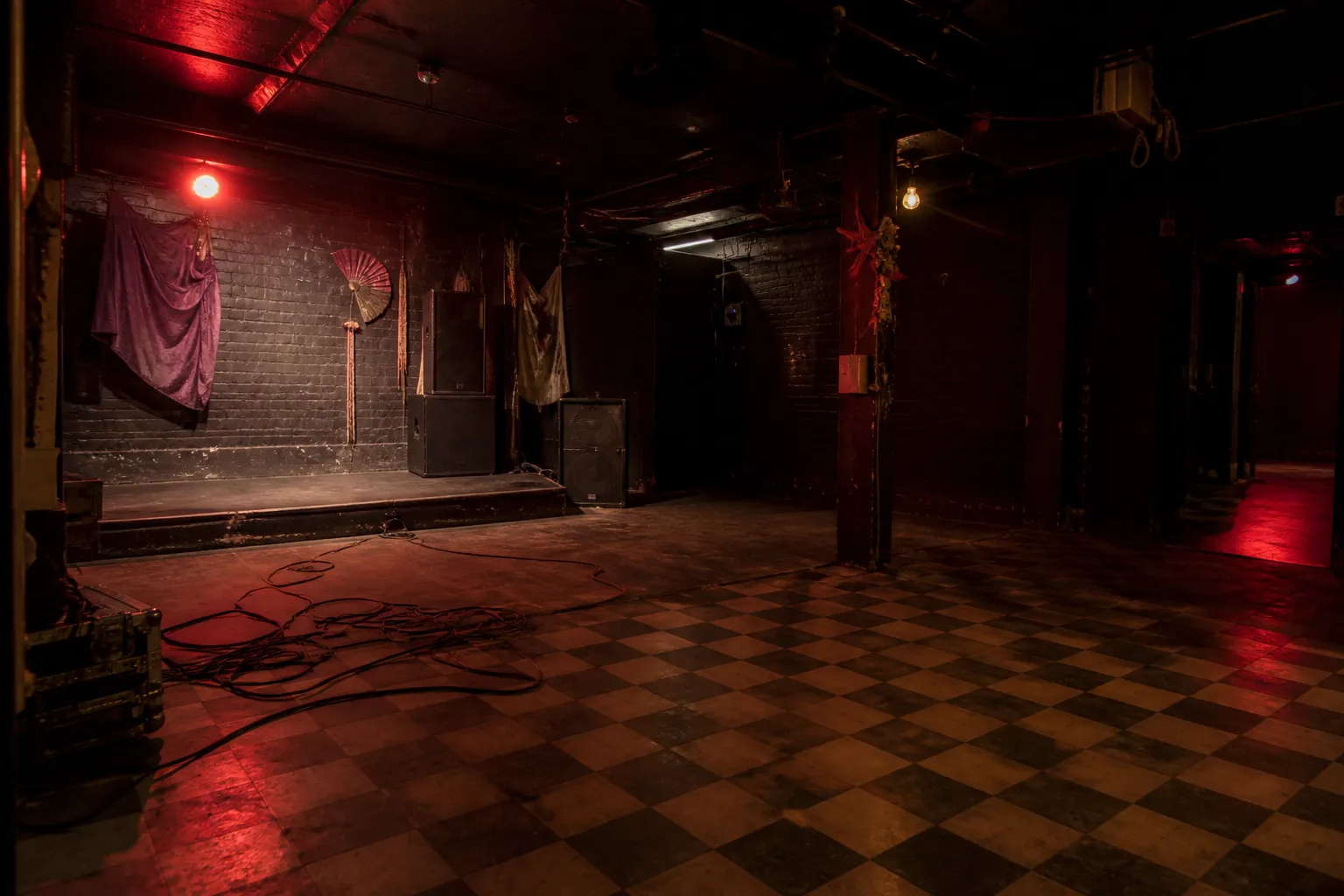
The Batcave began with a problem more ordinary than its reputation. Specimen, a band with theatrical clothes, sharpened silhouettes, and few reliable places to play, needed a room. The practical answer was to provide the whole night themselves. In 1982, singer Olli Wisdom and guitarist Jon Klein helped turn that answer into a recurring London club. The Batcave gave Specimen a stage, but the stage soon mattered less than the machinery around it: the door, the records, the décor, the flyers, the people who arrived dressed as if attendance were itself a performance. 1
Calling the Batcave the place that “invented goth” makes the story tidier and less true. Dark post-punk already had several histories. Bauhaus came from Northampton, the Cure from Crawley, the Sisters of Mercy from Leeds; Siouxsie and the Banshees had built an imposing visual and musical vocabulary before the club opened. Even the word goth remained unstable, sometimes an insult, sometimes a press convenience, sometimes a category musicians rejected. The Batcave’s achievement was different. It brought scattered sounds and appearances into repeated physical contact, then made that contact visible enough to copy. 2
A room assembled for Wednesday
The best-known Batcave address was the Gargoyle at 69 Dean Street in Soho, a club space with a long nocturnal history. Accounts remember Wednesday nights, a former strip-club interior, a small live area, theatrical turns, and a crowd that treated the room as more than a sequence of concerts. The night moved between London venues over its life. The Batcave was not sacred architecture; its identity survived because the organizers could reinstall a recognizable set of relations in another room. 3
Those relations required weekly labor. Someone negotiated access and paid for the venue. Someone carried equipment, checked a microphone, decorated walls, chose records, designed notices, worked the entrance, kept a timetable moving, and cleaned up. A club history built only from famous visitors hides this work. A photograph of Nick Cave, Siouxsie Sioux, Marc Almond, or members of the Cramps confirms glamour; it does not explain why a stranger returned the next Wednesday.
Return was the real unit of scene-making. A one-off concert can gather an audience around a band. A weekly night lets people recognize one another, revise their clothes, exchange news, form bands, quarrel about records, and bring friends. It gives an experiment a deadline. However little money or rehearsal time a performer has, next Wednesday remains next Wednesday. The calendar converts taste into habit.
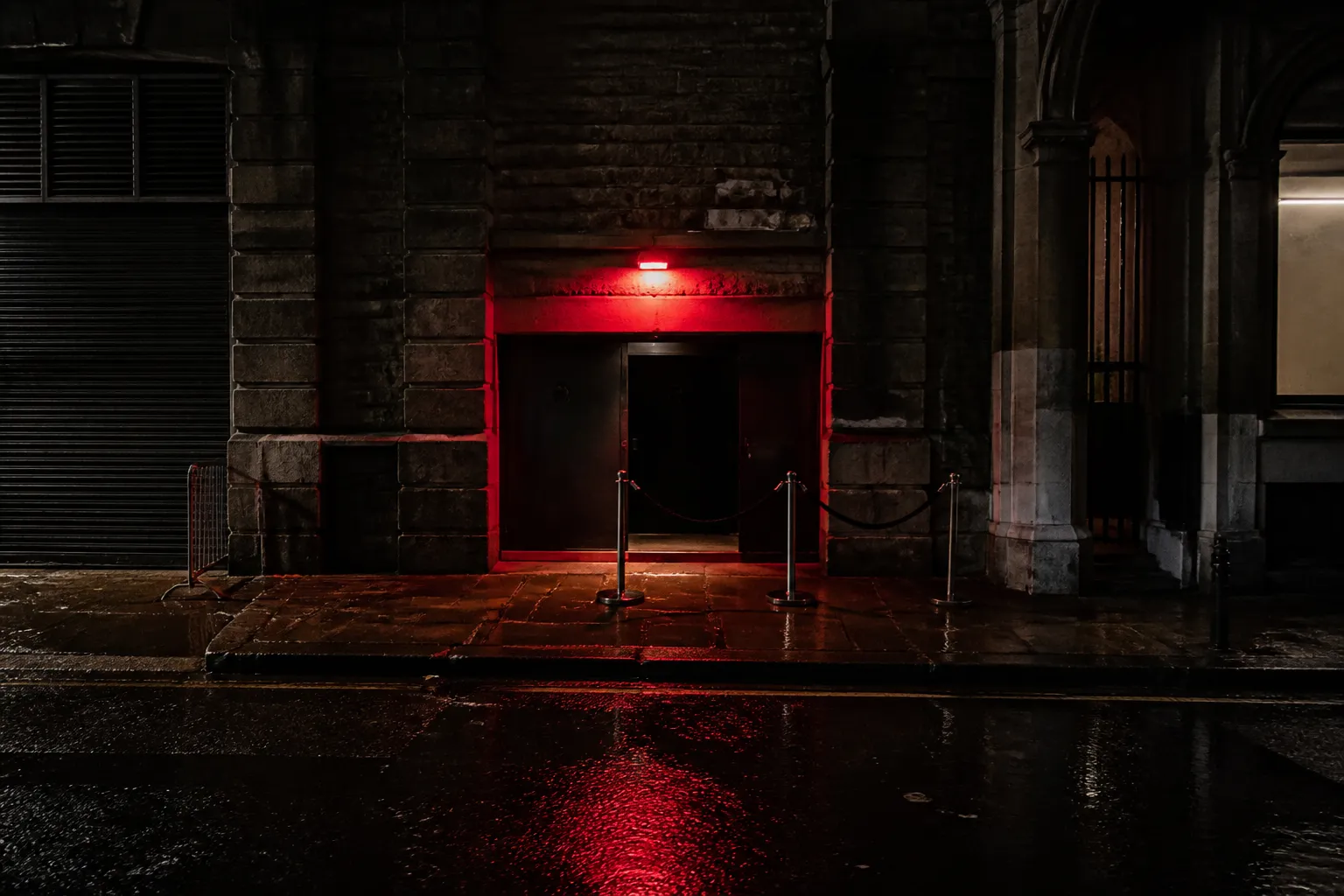
The economics of that habit were fragile. Door money had to cover a room before anyone could assume a cultural legacy would follow. A reliable core audience therefore mattered differently from a large crowd at a one-off show: regulars lowered the risk of opening, while visitors brought enough variation to prevent the night becoming private. The club had to feel selective without becoming empty. Its entrance performed that balance, identifying the night to those looking for it while making arrival feel like a passage out of ordinary Soho commerce.
The house band was only one component
Specimen supplied an anchor. Their glam-informed, deliberately exaggerated presentation connected punk damage to cabaret, horror, and older theatrical rock. But a house band does not automatically produce a scene. The Batcave widened its program through guests and through a format in which recorded music and visual spectacle did not feel like dead time around a headline act. Alien Sex Fiend became closely associated with the club; other performers moved through it; dancers and individual regulars became recognizable figures in reports and photographs. 4
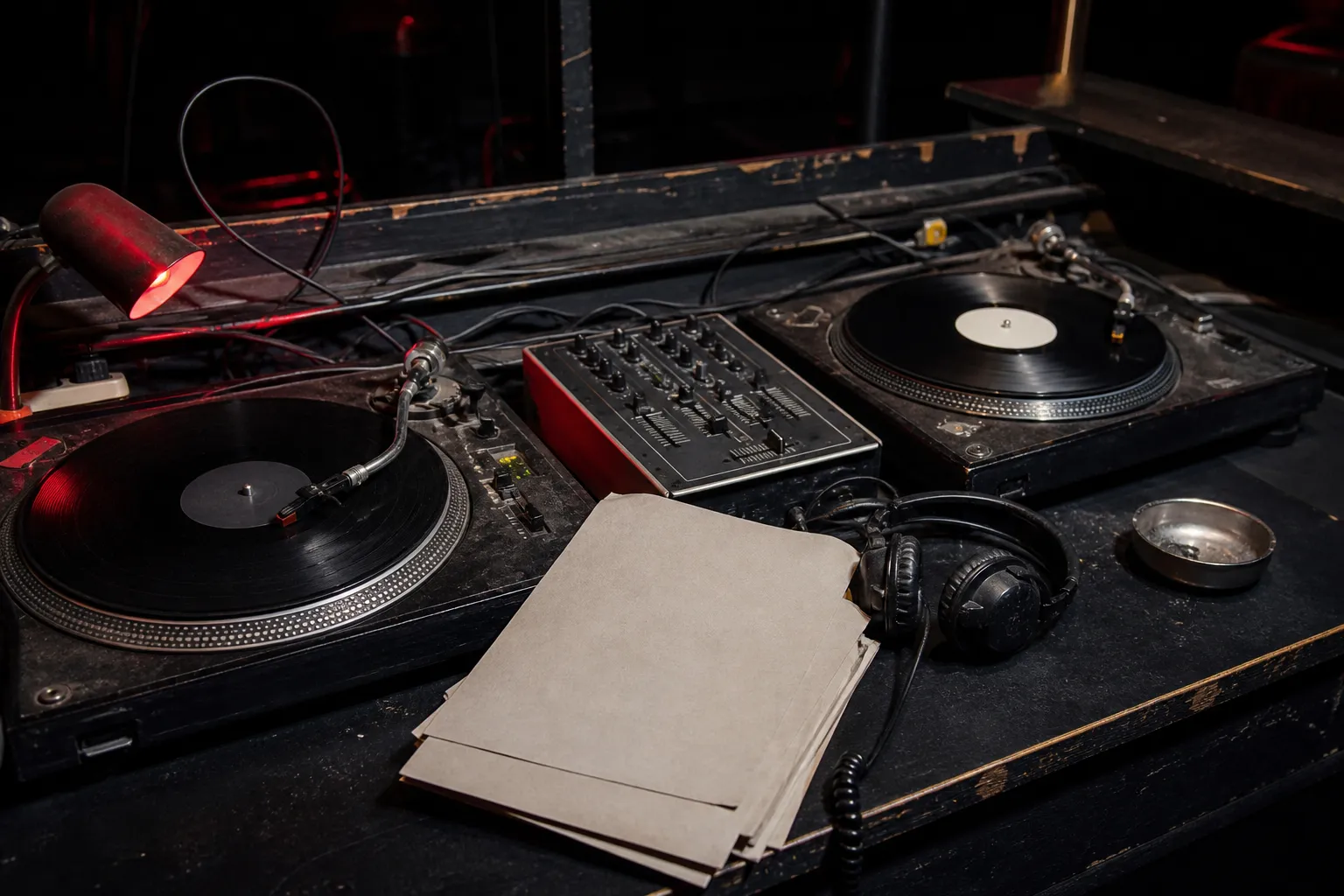
The DJ booth helped different music coexist without requiring a manifesto. A sequence could place post-punk next to glam, electronic rhythm, punk, garage rock, or a record valued mainly for its atmosphere. On a dance floor, categories were tested with bodies before critics stabilized them in print. If a selection emptied the floor, that was information. If an unlikely record held it, the night acquired another usable connection.
A playlist of canonical goth songs cannot capture the Batcave’s musical identity. It came from adjacency. A guitar band could be heard after a machine pulse; a camp record could puncture solemnity; a familiar punk single could suddenly sound conservative. One recollection reports that when a DJ played the Sex Pistols, the crowd sat down. Whether treated as a perfect symbolic scene or an unusually neat memory, the moment suggests that a generation shaped by punk did not necessarily want to preserve punk as a fixed repertoire. 2
Clothes that changed the room
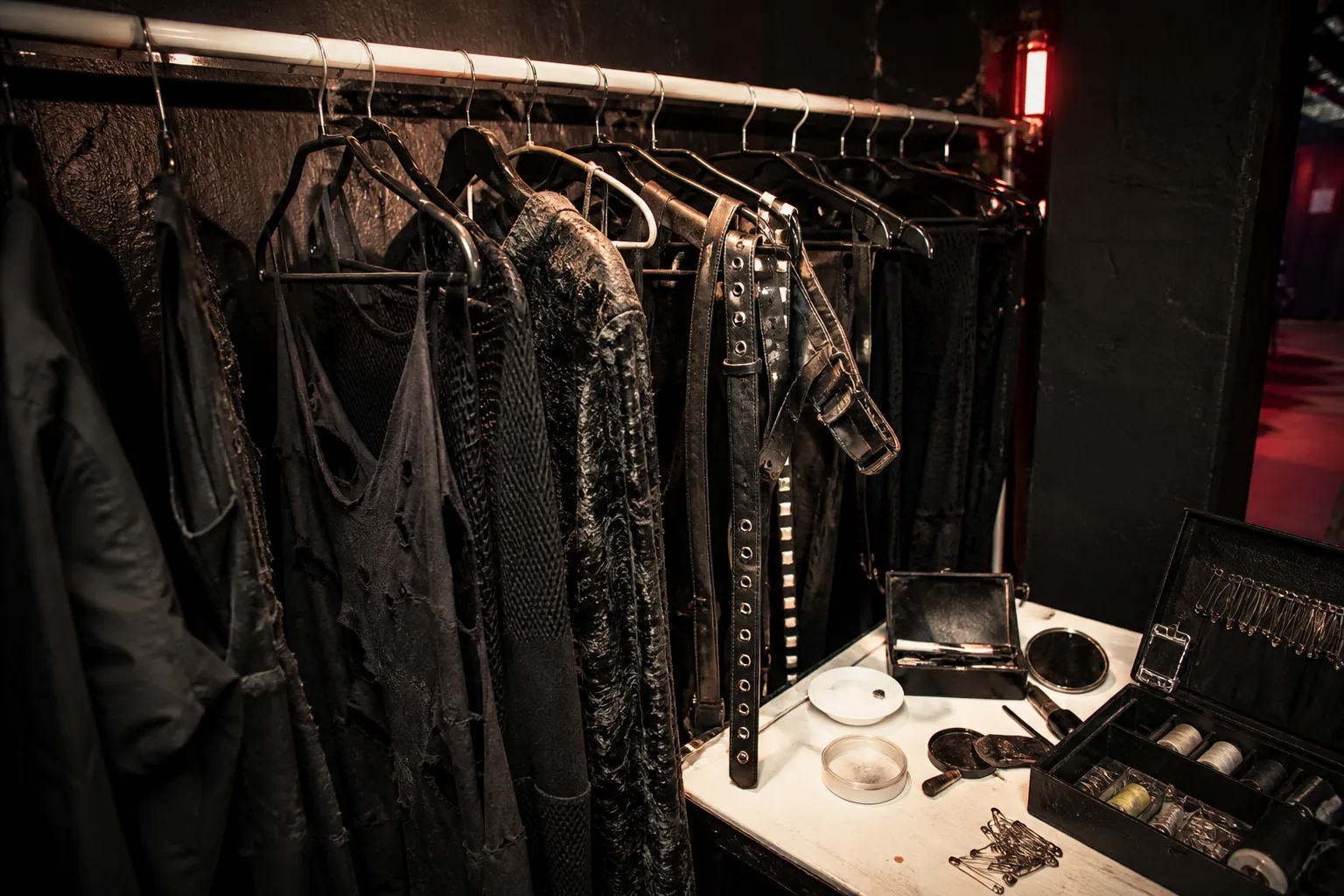
The photographs that survive can make early goth style appear complete from the beginning: towering hair, pale faces, black layers, mesh, leather, religious or fetish references, and silhouettes borrowed from several decades at once. In practice, the look was made person by person. Garments were cut, dyed, torn, combined, and repaired. Makeup had to work under bad club lighting. Hair had to survive travel, rain, sweat, and a low ceiling.
These choices were not an accessory to the music. They changed how the room functioned. A dramatically dressed audience narrowed the distance between stage and floor; a performer could step down and remain inside the same visual field. Clothes also made the night photographable. The style press could represent a crowd through a few faces and outlines, allowing readers far from Soho to understand that the club offered permission as much as entertainment.
Permission did not mean a single uniform. Early accounts emphasize a mixture of glam-punks, horror enthusiasts, artists, fashion experimenters, and post-punk musicians. The most useful quality of black was not ideological purity but combinability. It joined second-hand Victorian shapes, punk hardware, cabaret makeup, and homemade alterations without making their sources disappear. The club concentrated those experiments until resemblance emerged.
Later retail versions of goth would sell resemblance as a package. The Batcave belonged to an earlier, less settled phase in which getting the look wrong could be productive. Excess, humor, and awkward construction mattered. Contemporary summaries that describe only doom miss how often participants recall frivolity, theatrical pleasure, and jokes. Wisdom himself resisted the idea that the night was uniformly grave. 1
Paper doors into the club
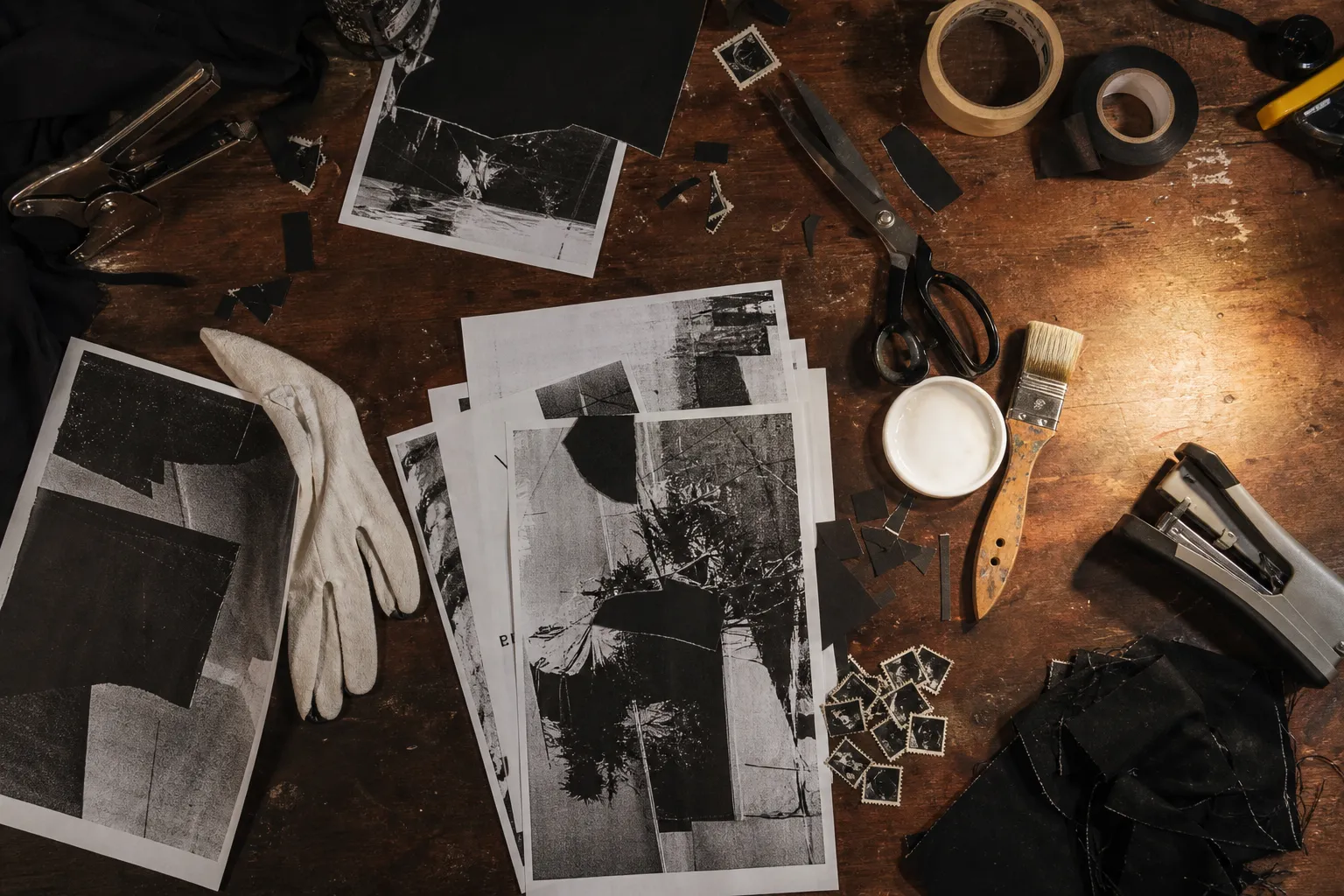
Before social media, a club reproduced itself through paper, telephone calls, listings, photographs, and conversation. A flyer had to carry enough information to deliver a person to the correct doorway on the correct night. It also had to promise a world. High-contrast photocopying, cut-and-paste typography, distorted faces, bats, crosses, torn edges, and cheap black ink could make limited production resources look deliberate.
The flyer was both advertisement and portable scenery. Pinned to a bedroom wall or record-shop board, it extended the club beyond opening hours. A fanzine report did something similar in more detail: names could be learned, outfits studied, bands located, arguments continued. The Museum of Youth Culture’s later Batcave exhibition drew on flyers, photographs, clothing, and memorabilia because the event’s history resides in this dispersed material as much as in recordings. 5
Press coverage changed the scale again. When style and music magazines entered the room, regulars became characters in a national account of a new tribe. Coverage attracted visitors, but it also encouraged simplification. A busy mixed night could be compressed into “goth,” a word clear enough for a headline. The label helped strangers find the scene while giving participants something to resist.
Photography imposed its own selection. Flash picked out white makeup, reflective jewelry, teased hair, and sharp black outlines more readily than conversation, waiting, or the work of setting up. The surviving visual record therefore favors the scene at maximum display. What it cannot show as easily is the time between gestures: lending someone eyeliner, passing a demo tape, learning that a band needed a bassist, or discovering which train still ran after closing. Those exchanges were quieter, but they converted recognition into collaboration.
A scene had to be legible enough for people to find it and unsettled enough to leave room for argument. The Batcave offered both. Its imagery was instantly readable, while its records, clothes, humor, and social life still gave regulars something to dispute.
The tour as a copying machine
The Batcave did not remain only a Soho destination. Touring versions carried performers, records, and a recognizable name to other towns and abroad. A touring club differs from a touring band. It presents a temporary environment rather than a single act. Local audiences see not merely what to listen to but how sound, clothes, staging, and behavior can fit together. 3
The touring club supplied a template rather than a fixed package. After the visitors left, someone could start a night under another name, book local bands, alter a community-hall room, and choose records according to what had worked. The copy would not be exact. Local rent, licensing, transport, audiences, and available music changed the formula. That imperfect replication let the scene grow without headquarters.
Britain’s early goth map therefore cannot be drawn as arrows leading only outward from London. Leeds, Northampton, Crawley, and other cities generated bands, clubs, labels, and audiences with their own conditions. People and records moved in several directions. The Batcave’s visibility made it a powerful relay, not a sole point of origin.
Nor did every copy need the same bands. What traveled most efficiently was a format: combine live acts with records, treat decoration as part of programming, let the audience alter the image of the night, and document the result. A local promoter could substitute available rooms and performers while retaining the expectation of transformation. Family resemblance emerged without central rules. The model was precise enough to recognize and loose enough to survive translation.
What the room actually produced
The Batcave closed after a short life, while goth continued, subdivided, and returned in later generations. Its brevity is not evidence of failure. Nightclubs are often temporary businesses working in borrowed rooms under financial, licensing, and personal pressure. Their products are difficult to inventory: friendships, poses, habits of listening, band lineups, photographs, confidence, and the decision to begin another night elsewhere.
The club did help make a recognizable public. It offered musicians a close audience and offered that audience a role larger than consumption. It gave magazines pictures, gave touring visitors a destination, and gave local organizers a model small enough to reproduce. None of those tasks required the Batcave to define goth correctly. They required it to open again.
No single role authored that system. Specimen supplied an anchor; DJs connected records; regulars made the visual field; photographers and writers carried it outward; door workers and venue staff made another Wednesday possible. The club’s identity emerged from their overlap.
Origin myth and infrastructure ask different questions. One asks who was first. The other shows what allowed people to meet, work, and return. Batcave organizers turned a band’s booking problem into a weekly system: a night that people could wear, photograph, debate, and carry home.