

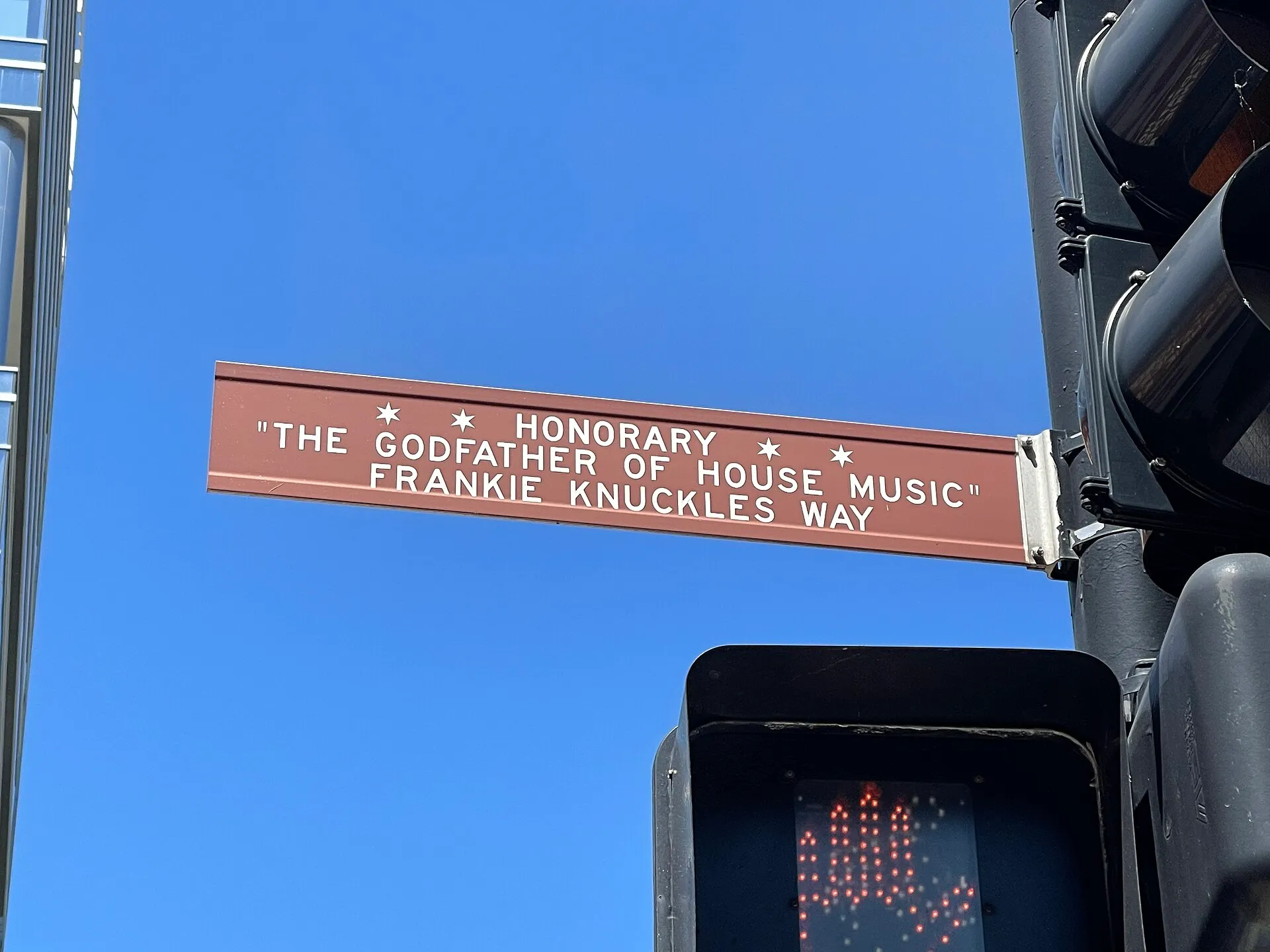
A street sign is tidy. A music scene is not. Chicago’s honorary Frankie Knuckles Way sits near 206 South Jefferson Street, where Knuckles was resident DJ at the Warehouse from 1977 to 1982. The sign fixes a name and location. The music made around that address depended on moving parts: dancers, imported records, repaired sound systems, reel-to-reel edits, radio mixes, after-hours schedules, and people carrying ideas between clubs. 2
House is now a global production category and a default four-beat pulse in popular music. That scale can make its origin sound technically inevitable: disco plus a drum machine equals house. Chicago’s evidence describes a social process first. Records were selected, extended, and tested for specific queer Black and Latino crowds before the style had a stable name or a retail section.
206 South Jefferson
Promoter Robert Williams opened the Warehouse in a three-story commercial building in Chicago’s West Loop. Frankie Knuckles arrived from New York, where he had learned inside a dance culture shaped by venues such as the Loft and by his friendship with Larry Levan. In Chicago, he encountered a crowd and a room that required their own solutions.
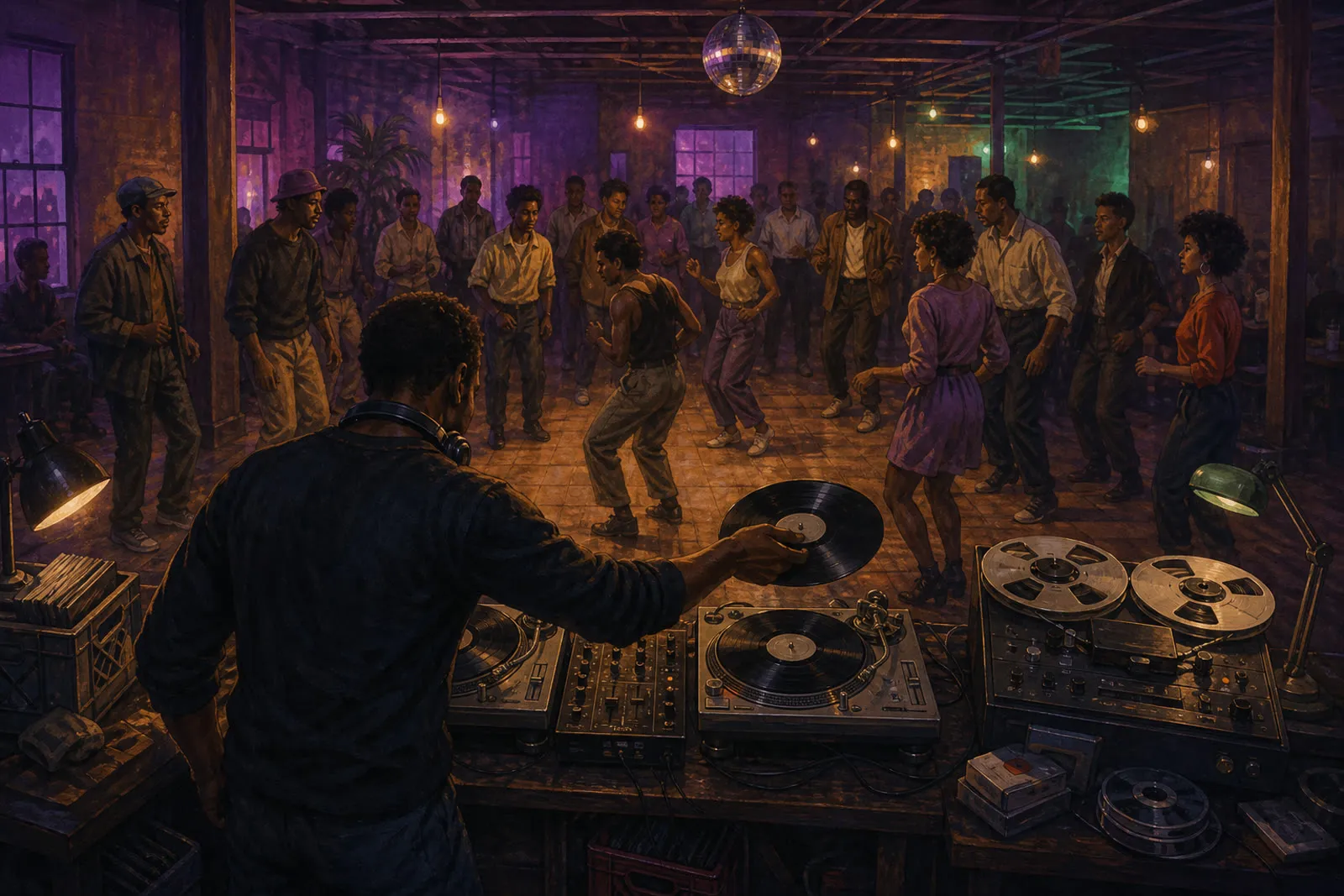
The Warehouse was a membership-based late-night space rather than a conventional concert hall. People came to dance across a long sequence, not to face a stage and applaud individual songs. The DJ therefore worked with duration at the scale of an evening. A record had to be judged for where it could enter, how long its energy would hold, and what another record might reveal inside it.
Black and Latino gay men were central to that audience. Describing the room merely as an underground club removes the reason underground space mattered. Queer people of color built forms of congregation in a city organized by segregation, policing, and commercial exclusion. The dance floor offered pleasure and social recognition, but it was not outside those pressures. 3
The edit is a form of listening
Knuckles worked primarily with existing records before Chicago house became a steady stream of locally pressed tracks. Disco, Philadelphia soul, European electronic music, post-disco records, and other material entered the set according to function rather than a later genre taxonomy. The aim was practical: make those differences cooperate under dancers’ feet.
Reel-to-reel tape allowed useful sections to be lengthened. A break, instrumental passage, or percussion figure could be copied and joined so the transition lasted beyond the commercial arrangement. Equalization and a sound system changed the physical balance. Bass that seemed modest on a home stereo could organize a large room.
These techniques treat the recording as material without pretending it has no author. The DJ’s work is relational: selecting one passage, placing it against another, and reading the crowd’s response. That work spans records rather than sitting inside one master. Early house history is therefore difficult to preserve through a list of canonical tracks alone.
A name that remains disputed
The most repeated origin story says “house music” shortened “Warehouse music,” the records associated with Knuckles’s sets. Other accounts connect the term to bins in record stores, home-produced tracks, or the broader scene. Memories do not align perfectly, and commercial use of the word changed quickly.
Genre names often become clear only after the practices they describe have spread. A dancer in 1979 did not need a settled definition of house to understand the difference between a responsive set and ordinary radio programming. The category followed the work.
Chicago’s 2023 landmark ordinance uses the strong institutional description of the Warehouse as the birthplace of house music and emphasizes its importance to LGBTQ, Black, and Latino communities. The designation records a civic judgment made decades after the club closed. It does not require every participant to tell the origin in identical terms. 1
Knuckles was not the whole city
The “godfather” title attached to Knuckles recognizes enormous influence and creates a simple family tree. Chicago house had more than one room. After Knuckles left the Warehouse, he opened the Power Plant. Ron Hardy’s work at the Music Box produced a different intensity, with adventurous programming and a crowd that expected risk. Other DJs, promoters, dancers, engineers, and record-store workers expanded the field.
Local radio mattered as much as club mythology. WBMX’s Hot Mix 5 brought continuous mixing and Chicago selections to listeners who could not or did not enter the late-night venues. A broadcast could be recorded on cassette, replayed, and studied. The signal made technique portable across bedrooms, cars, parties, and neighborhoods. A listener could pause, rewind, compare transitions, and learn mixing without ever gaining access to a club booth.
The scene also included women and queer producers whose work is lost when history cycles through the same few male pioneers. Commercial discographies leave gaps that oral histories and flyers can fill. The HistoryMakers finding aid for Knuckles is valuable partly because an interview preserves professional detail that a record label does not. 5
When the machine entered the mix
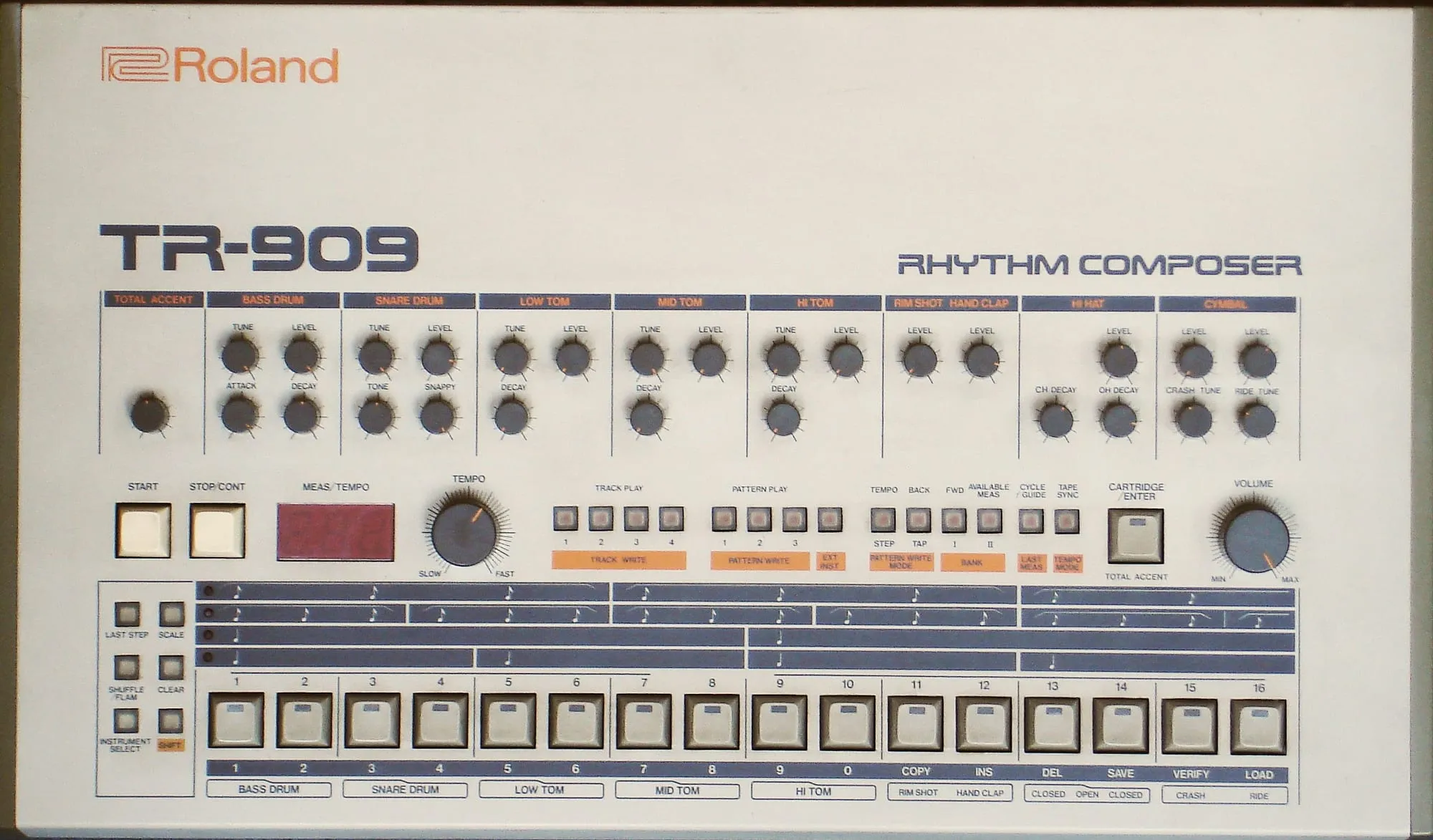
As fewer new disco records supplied the exact percussion and duration DJs wanted, drum machines became one way to continue a groove. A machine could reinforce a break under another record or become the center of a new track. The step sequencer turned rhythm into a row of decisions: which beat receives a kick, where a clap sits, how an offbeat hi-hat changes the body’s expectation.
The Roland TR-808 and TR-909 are now treated as house icons. Neither device contained the culture in its circuitry. Presets became style only through users choosing tempo, tuning drums, adding swing, routing outputs, and combining the machine with voices, bass lines, records, and inexpensive studio equipment.
Repetition was not a shortage of ideas. On a dance floor, small changes become large because the reference pattern is stable. Removing a kick for one bar can reorganize a room. Returning it can feel like weight restored. Producers learned form through the physical response of dancers rather than through an abstract rule that house must use four kicks.
From exclusive tape to pressed record
Early locally made tracks could circulate on tape before receiving a commercial release. Exclusivity mattered to DJs, and unfinished versions could be tested in the club. Audience response became practical feedback: a bass line disappeared on the system, an introduction was too short for mixing, or a breakdown held tension longer than expected.
Small labels then turned that local knowledge into vinyl. Trax and DJ International released music at a pace that helped establish house outside Chicago. Their catalogs carried singers, producers, instrumental tracks, raw machine experiments, and polished arrangements under one expanding label. Contracts and royalties were often disputed; the energy of the records should not romanticize the business.
Once records traveled, house changed ownership in practice even if Chicago remained a declared point of origin. DJs and producers in New York, Detroit, London, Manchester, and European resort towns adapted the pulse to their own rooms. Export was not simple duplication. Every sound system and local network altered the use.
The club as an instrument
A club’s contribution cannot be reduced to an address. Ceiling height, speaker placement, crowd density, lighting, ventilation, security, door policy, and closing time all affect music. DJs learned the room at 206 South Jefferson by working inside it. Dancers learned its signals through repeated attendance.
The surviving building matters even though its current interior does not recreate the Warehouse. The shell establishes scale and location. It places the scene in the West Loop before later redevelopment changed the neighborhood’s economics and appearance. Preservation blocks easy demolition; it cannot restore an audience or make the property a functioning queer club.
PBS and WTTW’s oral-history account treats the Warehouse as part of a cultural revolution because participants describe what the room allowed them to do. The testimony is strongest when it remains specific: who was admitted, what the DJ played, how a night unfolded, and how the sound differed from other venues. 4
Between Chicago and Detroit
Chicago house and Detroit techno are sometimes placed in parallel origin stories, one “soulful” and one “futurist.” The actual exchange was more direct. Detroit DJs visited Chicago. Chicago records reached Detroit radio and clubs. Equipment, mixes, and personal relationships moved along the highway between the cities.
The distinctions remain useful when they describe working networks rather than racial essences. Chicago’s early house economy grew from its particular clubs, labels, and radio. Detroit’s techno labels and studio groups developed different approaches to arrangement and technological imagery. Neither city was sealed.
Innovation did not radiate outward from one genius or one machine. A young producer could hear a radio mix, travel to a club, borrow equipment, return home, and make a record that changed what the original DJ played next. Influence moved in loops.
What preservation can hold
In June 2023, Chicago granted landmark status to the Warehouse building. The designation protects significant exterior features and formally ties the property to house music and the communities that made it. It followed organizing prompted by the building’s sale and the possibility of redevelopment. 1
Cities often recognize an underground culture after the land around it has become valuable and after many participants have been displaced or lost. A plaque can honor the past while current queer nightlife faces rent, licensing, and policing pressures. Preservation is meaningful when it supports memory without declaring the work finished.
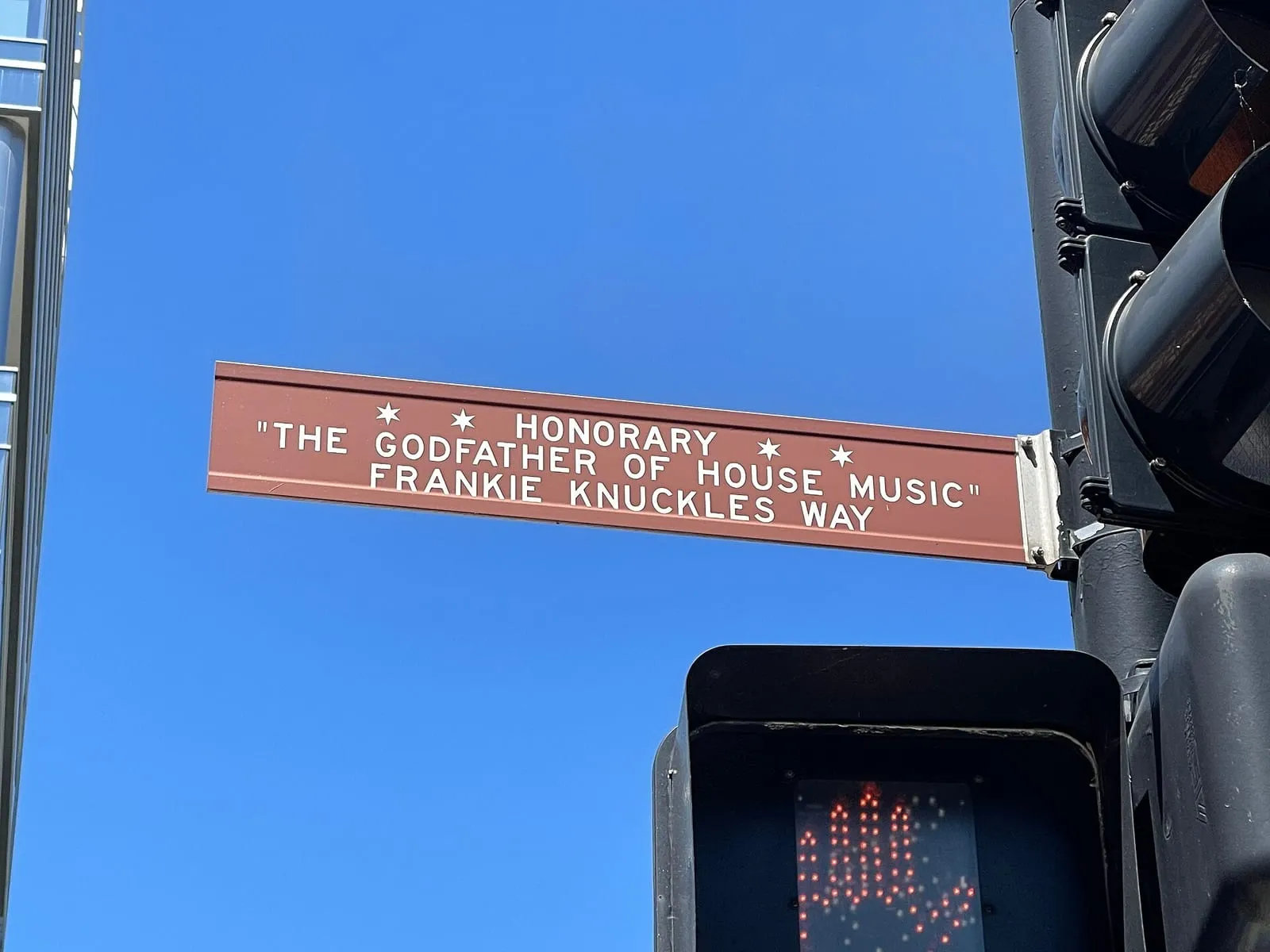
The honorary street sign performs a similar task. It inserts Frankie Knuckles into the official map and gives visitors a visible point of reference. Yet no sign can display a transition stretched by tape, a crowd adjusting to a new drum pattern, or the informal expertise at a record-store counter.
The record after the room
House eventually became a reproducible record form: kick drum on each beat, offbeat hi-hat, repeated bass, vocals or samples, breakdown, return. Those elements can be described in software and taught without reference to Chicago. The form’s durability is an achievement. It also makes the earlier room easy to forget.
The earlier sequence began with a queer Black and Latino audience sustaining a late-night space. DJs learned to join records for that audience. Tape and sound-system practice changed the available duration. Local radio widened access. Drum machines and small studios made new material. Labels pressed the experiments, sometimes under unfair terms. Other cities answered.
The machine did not cause the scene. The room did not single-handedly invent the record. House formed in the exchange between them, one long night at a time. The dancer, the technician, and the person working the door belong beside the DJ and producer. They determined which rooms stayed open, which records became necessary, and whether a repeated beat felt like a refuge, a test, or simply the right way to continue until morning. Those judgments were part of the music before they were part of any genre history.


,_2012_-9.jpg)