

The crucial room in early Belo Horizonte metal was not a studio. It was a record shop. Cogumelo sold Brazilian rock and MPB alongside imported heavy-metal records that were difficult to find elsewhere in the city. As demand for the imports grew, the shop became a meeting point. Customers did more than buy finished music. They exchanged names, addresses, tapes, magazines, and news about bands that might otherwise remain separated by distance and cost. A retail counter became the fixed address of an emerging scene. 4
Sepultura’s later international career can make its beginning look inevitable, as if a successful band simply waited to be discovered. In 1984 there was no established route from a teenage extreme-metal group in Belo Horizonte to a large foreign label. Instruments and imported records were expensive. Specialist coverage was scarce. The city’s bands had to build a local audience while learning a fast-changing style from partial information. Cogumelo supplied a place where those efforts could meet.
A city learning the music sideways
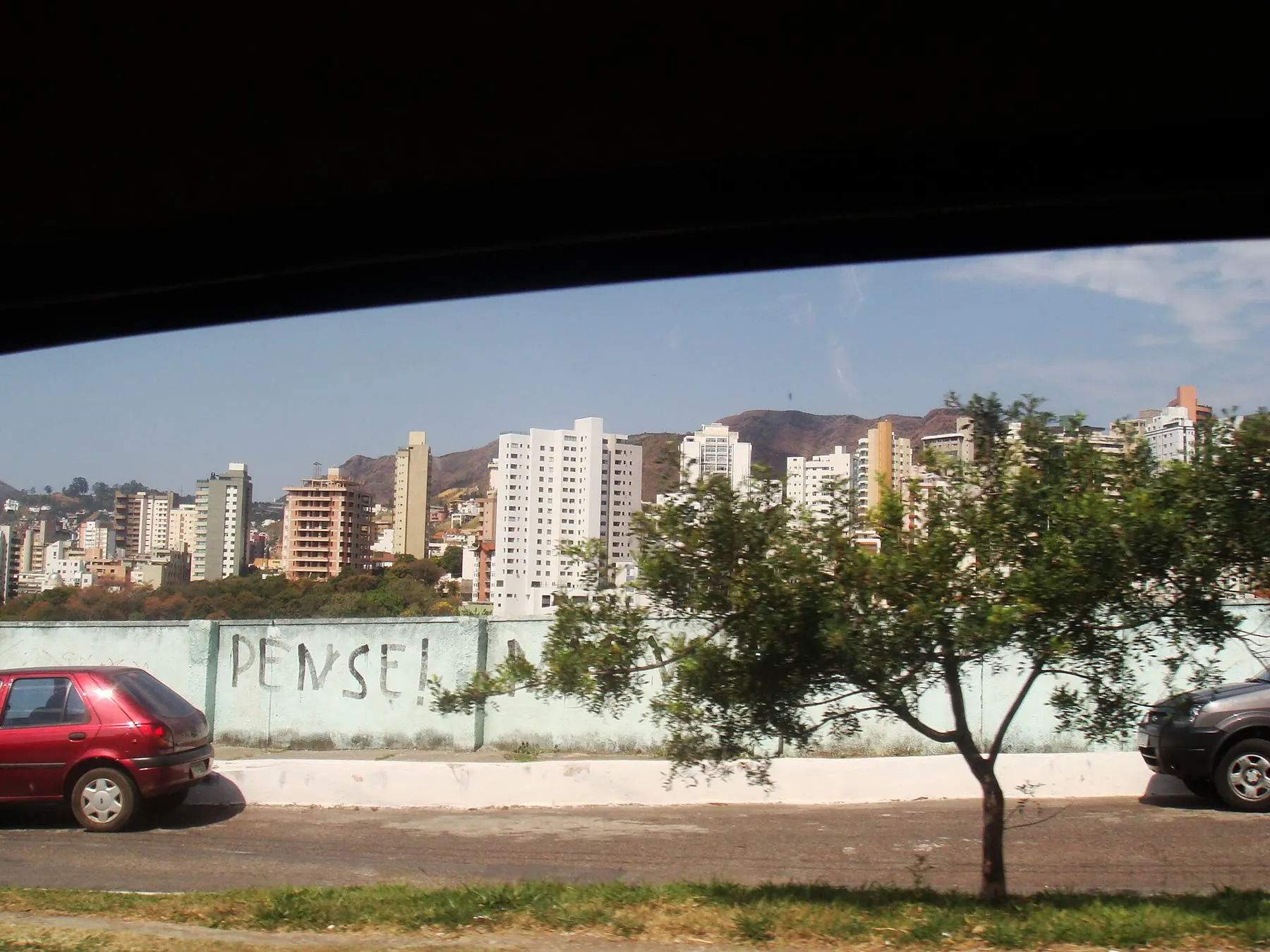
Belo Horizonte was designed as a state capital, laid out on a grid and surrounded by hills. By the early 1980s its young metal listeners were receiving sounds made elsewhere through records, copied cassettes, radio programs, magazines, and correspondence. The flow was uneven. A band could know the image or reputation of Venom, Motörhead, or a new thrash group before having easy access to an entire catalog. That delay encouraged imitation, misunderstanding, and invention at the same time.
The local field was larger than Sepultura. Academic accounts name Chakal, Holocausto, Sarcófago, Mutilator, Overdose, Sagrado Inferno, Witch Hammer, Sextrash, The Mist, and other groups active around the scene. They shared listeners and practical resources but did not converge on one sound. Overdose drew from heavy metal and progressive rock. Sarcófago pushed toward a rawer form that would circulate internationally in the extreme underground. Chakal connected performance, radio, and Cogumelo through vocalist Vladimir Korg. 3 5
Calling all of this “Brazilian thrash” hides the instability that made the records interesting. Thrash, death metal, black metal, punk, and older heavy metal had not settled into clean local categories. Musicians were working out picking patterns, drum speeds, vocal textures, English pronunciation, stage identities, and recording practice at once. The harshness did not come from a national essence. It came from specific bands making choices with the equipment and information available to them.
The political setting mattered without dictating one style. Brazil’s military rule ended in 1985 after a long process of abertura and public pressure. Belo Horizonte’s metal scene grew during that transition, when censorship, economic instability, and a limited market for underground music shaped everyday possibilities. The bands did not all write direct political programs, and their violent imagery cannot be reduced to one response to dictatorship. A generation was organizing cultural space while the country’s public institutions and freedoms were being renegotiated. 3
Two bands, one piece of vinyl
João Eduardo and Creuza “Pat” de Faria, the owners of Cogumelo, saw that the gathering around the shop could support a record. Instead of financing a full album by an untested group, the new label divided one release between two bands. Overdose recorded Século XX; Sepultura recorded Bestial Devastation. Each received one side of the 1985 split LP. The format spread cost and attention while giving the label two audiences to work with. 4 2
The pairing also preserved contrast. Overdose’s side had a different musical history and a more elaborate sense of arrangement. Sepultura sounded younger and more abrasive. Max Cavalera sang and played rhythm guitar, Jairo Guedz handled lead guitar, Paulo Jr. played bass, and Iggor Cavalera played drums. The recording did not document a polished version of a settled band. It captured a lineup still deciding what its extremity would mean.
A split record is an argument about context. Put two bands on one object and listeners must hear each beside the other. The label gains a catalog entry; the groups share manufacturing and distribution; the shop has a local artifact to sell. This was less romantic than the story of a band being found by a visionary executive. It was also more repeatable. Cogumelo could use the response to the split to judge whether another pressing was possible.
Iggor Cavalera later recalled that Cogumelo owners João and Pat attended Sepultura’s first show in December 1984, a performance most of the audience abandoned, and approached the band about the Overdose split. The memory removes any illusion of a polished audition. The label heard possibility inside a set that even the band’s friends described as terrible. 6
Sepultura followed with Morbid Visions in 1986. Cogumelo also issued the Warfare Noise compilation, placing Chakal, Holocausto, Mutilator, and Sarcófago on one release. The compilation worked like a scene map. A listener outside Minas Gerais could receive several points of entry in one package, while the bands became mutually legible as part of a city rather than isolated demo names. 5
The visual language did similar work before a listener heard a note. Hand-drawn logos, high-contrast photographs, apocalyptic paintings, and English titles located the records inside an international metal conversation. Chakal’s Abominable Anno Domini, for example, used Pieter Bruegel’s The Triumph of Death as cover imagery. The choice joined a sixteenth-century European painting to a young Brazilian band’s record and gave local listeners another object to decode. Research on the scene traces how such images circulated with the music rather than treating packaging as decoration. 5
The shop as an information desk
Independent distribution required conversation. A customer might ask which new import had arrived, who was rehearsing, or how to contact a band. Musicians could learn what listeners were buying without a formal market report. Flyers and records placed local activity beside international releases. The shop translated a wide network into daily, face-to-face traffic.
This did not make the scene equal. Money still determined who could buy equipment, press a tape, or travel. The bands were overwhelmingly male, and later retellings often reduce the work of women around shops, management, correspondence, and production to supporting roles. Pat de Faria’s part in Cogumelo shows that the label’s infrastructure was not created only by the men visible on record sleeves. People maintained the routes as well as occupying the stage.
Radio added another route. Vladimir Korg’s association with the Metal Massacre program gave local listeners a voice and a schedule to gather around. A song heard on air could lead back to the shop, a show, or a tape exchange. Each medium did a different job: radio created reach, cassettes made copying cheap, vinyl gave the music a durable commercial object, and live shows tested whether the bands could hold a room. 5
English lyrics were another distribution tool, though early pronunciation and grammar could be unstable. The language connected local bands to the records they admired and made song titles legible to tape traders abroad. It could also conceal the specific place where the work was made. Later Sepultura records became more explicit about Brazilian politics and history, but the early releases already carried their location through the conditions of performance, recording, and exchange.
From rawness to control
Sepultura’s early records are sometimes praised because they sound uncontrolled. That description misses the work inside them. Iggor Cavalera’s drumming had to coordinate speed with abrupt stops and riff changes. Max Cavalera’s rhythm guitar had to make dense distortion intelligible enough for the band to move together. Jairo Guedz supplied lead lines within a limited recording frame. The results were rough, but roughness and carelessness are not the same thing.
Andreas Kisser joined before Schizophrenia, released by Cogumelo in 1987. His arrival expanded the guitar vocabulary and helped the band make longer structures read clearly. The album remained aggressive while showing greater control of tempo, transitions, and harmonized parts. That development made Sepultura easier to understand outside the immediate scene without requiring it to become less heavy. The band’s official history places Schizophrenia at the point where its reach began expanding decisively. 1 Kisser’s own account describes meeting the band through a São Paulo show, visiting Belo Horizonte, and moving there after Jairo Guedz left. 7
Foreign labels did not encounter an empty space. By the time Roadrunner became involved, Cogumelo had already financed releases, built a catalog, and connected the band to an audience. Beneath the Remains in 1989 gave Sepultura a stronger international recording and distribution position, but its circulation depended on years of local proof. The global deal amplified a working structure; it did not create the band or its scene from nothing. 8
A scene does not leave town as one piece
Sepultura’s ascent changed how Belo Horizonte was viewed, but the other bands did not simply follow the same path. Sarcófago became influential through a more subterranean international network. Chakal, Mutilator, Holocausto, and Overdose developed different catalogs and audiences. Some lineups ended. Others continued under shifting conditions. Cogumelo kept releasing Brazilian metal, punk, and related music rather than becoming a single-band imprint. Its forty-year catalog records the scale of that continuity. 2
Local limitation was not a special ingredient that disappeared once professional resources arrived. Sepultura’s later work crossed that division. The band increased studio control, toured widely, and altered its rhythmic and political language. Max and Iggor Cavalera’s playing retained the physical directness of the early years while gaining access to different production tools. Andreas Kisser and Paulo Jr. helped carry the band through changes that would have ended a less durable organization. 1
The scene created local points of action beyond the bands that became large. A listener could find a record. A musician could hear a demo, meet another player, or learn where a show was happening. A shop could risk a split pressing. A compilation could make several bands visible together. Mail could take the object beyond the city.
What the counter made possible
The shop did not literally become every part of the system. Studios captured the music, plants pressed the vinyl, promoters arranged shows, radio carried songs, and listeners copied tapes. Cogumelo mattered because it joined those activities at a stable address. The counter was where imported influence met local response and where local response could become a product with a catalog number.
No sudden discovery created that route. The first way out of Belo Horizonte was assembled from ordinary transactions: asking for a record, leaving a tape, recognizing repeated demand, paying for studio time, dividing an LP, and sending copies farther than the bands could travel. By the time Sepultura reached an international audience, the city’s scene had already done the difficult first work. It had made itself recordable.
Cogumelo’s continuing catalog makes that work visible beyond Sepultura’s departure for a larger label. A scene is easy to narrate as a launchpad once one group succeeds, but a launchpad is discarded after use. The store and label remained a point of return for other bands, reissues, listeners, and records that never entered a global canon. The first split LP tested whether Belo Horizonte’s noise could support a repeatable local record business, and the answer produced shelves rather than a single souvenir.



.02.jpg)


