

Missy Elliott’s records do not begin with a stable division between beat and voice. A syllable can operate like percussion. A breath can announce a section. A sung phrase may supply the part that another rapper would leave to an instrumental hook. Then the voice changes size: close and conversational in one bar, projected as a command in the next, multiplied into responses around itself.
That range makes familiar credits easy to flatten. Timbaland produced most of Elliott’s early solo work and built rhythmic environments with her that changed R&B and hip-hop. Hype Williams and later Dave Meyers directed images essential to how the music circulated. Stylists, choreographers, dancers, guest vocalists, and engineers made those records and videos possible. Elliott’s authorship did not replace theirs. It connected songwriting, vocal arrangement, performance, business control, and visual conception before those jobs were handed to separate departments.
Portsmouth before the solo contract
Elliott grew up in Portsmouth, Virginia, and formed the vocal group Fayze with friends. The group, later renamed Sista, entered the orbit of DeVante Swing from Jodeci and the collective known as Da Bassment. There Elliott met and worked alongside Timothy Mosley, the producer who would become Timbaland. Sista recorded an album, but it was shelved. The failed release did not leave Elliott with nothing. It gave her practical knowledge of group vocals, labels, studio hierarchy, and how little a completed recording guaranteed. 1
The later sound did not arrive from an isolated pair of geniuses. Da Bassment was a Virginia network of singers, rappers, writers, and producers testing identities in the same professional circle. Ginuwine, Tweet, Playa, Magoo, and others moved through overlapping sessions. Ideas were heard in rooms, answered, and repurposed.
Elliott’s group training remained audible after Sista. She understood how background parts could frame a lead, how a short response could clarify a hook, and when two vocal textures were more useful than a denser chord. A solo Missy Elliott record would still behave like an ensemble of voices.
Writing from another singer’s position
After the Sista project stalled, Elliott concentrated on songwriting and production. She and Timbaland worked on records for artists including 702, SWV, and Aaliyah. The period established their partnership publicly before Elliott released a solo album. It also required her to write beyond the sound of her own performing voice.
In a 1997 Billboard profile, Elliott described beginning with the music rather than a completed lyric. That sequence made the track a set of physical cues. The length of a gap, the weight of a kick, or the pitch of a small keyboard figure could suggest how many syllables would fit and what kind of voice could deliver them. 4
Writing for another artist involves a second translation. A demo must communicate melody, rhythm, attitude, and structure while leaving room for the eventual singer. Elliott could record a guide part with enough character to define the song, then hear how Aaliyah’s restraint or 702’s group blend would alter it. Songwriting here was not lyrics passed across a desk. It was vocal production embodied in a temporary performance.
One in a Million as shared construction
Aaliyah’s One in a Million made Elliott and Timbaland’s approach difficult for the industry to ignore. The album did not rely on one uniform tempo or texture. Beats stopped, stuttered, and left unusually large areas unfilled. Aaliyah’s controlled delivery could remain quiet because the arrangements treated quietness as a source of tension rather than an absence of effort.
Elliott wrote or co-wrote key material and contributed vocals. Timbaland’s production supplied an asymmetrical rhythmic world; Aaliyah’s phrasing gave that world poise. The credits describe collaboration, not a rehearsal for one person’s later career. Still, the album proved that Elliott’s methods could organize a major R&B release before a label had positioned her as its central image. 6
That success changed the terms available to her. Elliott wanted a label arrangement through which she could develop artists. Sylvia Rhone at Elektra offered her The Goldmind imprint in connection with delivering a solo album. The resulting contract joined performance to business leverage. Elliott did not enter the spotlight simply because it had always been the final destination.
An album made before caution arrived
Supa Dupa Fly was recorded quickly. Elliott later recalled that the album took about two weeks, not because the music was careless but because she and Timbaland had already developed a working language. They were not spending the sessions inventing a relationship from the beginning. They could recognize when an odd sound or displaced rhythm belonged to the system they had built. 1
Later accounts often turn that speed into a deliberate campaign to sound futuristic. Elliott said they had no expectation that the record would change prevailing cadences. The choices were immediate: what felt good, what made them laugh, what left room for a voice, and what did not resemble the standardized arrangements around them.
The album also complicates the category of rapper. Elliott sings, raps, whispers, layers background parts, speaks, and hands space to guests. Busta Rhymes frames the record’s entrance and exit. Aaliyah, Ginuwine, Da Brat, Lil’ Kim, 702, Magoo, and others appear without turning it into a compilation. Elliott’s changing vocal roles hold the sequence together.
The beat does not come first every time
It is tempting to describe the partnership as Timbaland inventing beats and Elliott adding personality. That order misses the feedback between them. A producer can leave space because a particular vocalist knows how to activate it. A vocalist can choose an unexpected cadence because the rhythm does not dictate a conventional one. Each decision revises the other’s brief.
Elliott’s delivery often makes consonants do the work of drums. She clips the end of a word, repeats a compact phrase, or places an interjection where a percussion fill might otherwise sit. Elsewhere she stretches a sung vowel across the grid. These are not merely different “flows” laid over a fixed instrumental. They change which part of the track the listener experiences as the downbeat.
Silence is equally active. When a line ends early, the remaining space can expose a bass movement or make the next entry feel larger. Timbaland’s beats became known for unusual timbres and syncopation, but novelty sounds alone do not explain their shape. The records work because voice and programmed rhythm repeatedly make room for one another. 2
A sample made into dialogue
“The Rain (Supa Dupa Fly)” begins from a recognizable piece of Ann Peebles’s “I Can’t Stand the Rain.” The sample supplies more than a nostalgic reference. Its recurring phrase becomes a second voice with which Elliott can argue, agree, and play. The older record’s sound remains identifiable while the new arrangement changes its scale and rhythmic setting.
Most of Supa Dupa Fly is not built around prominent borrowed recordings, so this sample stands out. Elliott and Timbaland did not reject sampling in favor of supposedly purer keyboard programming. They chose different methods according to the song. Here, recognition is part of the hook. On other tracks, unfamiliar drum colors and sparse figures create the point of entry. 1
Elliott’s own voice moves around the sampled refrain rather than trying to overpower it. The record therefore stages authorship across time: Peebles’s performance, the original writers’ composition, Timbaland and Elliott’s new construction, and Elliott’s lead persona all remain audible. The credits matter because the pleasure comes from relation, not from pretending the earlier song has disappeared.
The body changes the frame
The video for “The Rain” enlarged the record’s changes of scale. Hype Williams used a fisheye lens and proposed the inflatable black suit. Elliott developed other scenes and cast friends and collaborators whose appearances connected to lines in the song. June Ambrose styled the suit, and makeup artist Billy B helped build the visual surface. The finished clip belongs to a team with named roles. 5
Elliott’s body was not treated as a problem to minimize before the camera could become inventive. The suit made volume the central graphic fact. Lens distortion expanded hands and faces toward the viewer. Beach, rain, metallic surfaces, and saturated color turned each setup into a distinct world while Elliott’s direct address kept the cuts connected.
Calling the video “futuristic” is accurate only if the word is unpacked. The future was not a generic silver backdrop. It was control over scale, costume, Black sociality, humor, and who could occupy the center of an expensive image. The New Yorker’s 1997 profile recorded Elliott’s part in conceiving the video while it was still a current release, before its images hardened into retrospective iconography. 3
Character is an arrangement tool
Across later records, Elliott’s voice often enters as a character already in motion. She can sound like an announcer, a friend passing information, a flirt, a comic antagonist, or the leader of a call-and-response. These positions affect the production. An announcer needs an entrance; a confidential voice needs closeness; a command needs space around it.
Humor is structural. An odd pronunciation or sound effect can mark the point at which a section turns. Elliott does not pause the record to deliver a joke and then resume the song. The joke changes the rhythm. That integration is one reason written lyric transcriptions describe only part of her craft. Timing, grain, and facial performance carry information the words cannot hold alone.
The approach also protects complexity from solemnity. Songs can address sexual agency, competition, dancing, work, and industry power without adopting one elevated voice to prove their seriousness. Play is not an escape from control. It is one of the ways Elliott demonstrates it.
Reversal without a magic trick
“Work It” provides the most famous example of Elliott treating recorded language as material. A reversed vocal phrase is inserted into the hook. Listeners heard a gesture that was both rhythmic and puzzling, then circulated explanations of what the reversal might conceal. The device belongs to a longer record-making history, but its placement made studio manipulation part of the song’s public identity.
Pressing reverse was only the first step. Reversed speech had an attack, contour, and duration that could answer an ordinary line. Elliott’s vocal performance supplies the material; recording technology changes its direction; arrangement gives the result a job. The same record draws on early hip-hop references and a drum passage associated with Blondie’s “Heart of Glass,” placing new processing inside an explicit conversation with older records.
That balance prevents a false choice between tradition and experiment. Elliott could look back to foundational hip-hop performance while making a mass-market single whose surface sounded unlike a museum exercise. Under Construction announces restoration in its title, but the music treats history as parts to handle rather than a fixed style to reproduce.
Video as a second arrangement
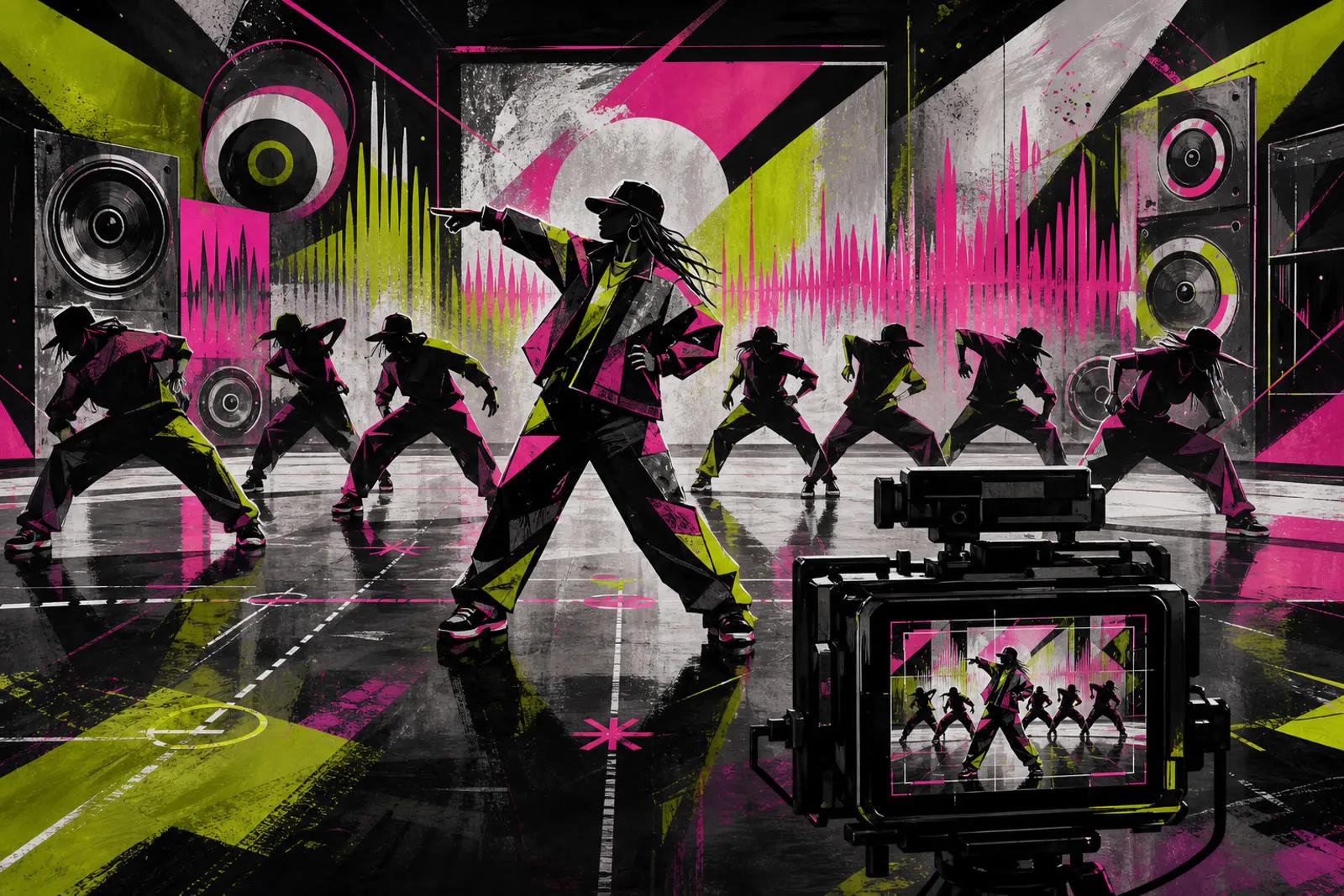
Elliott’s videos do not simply illustrate verses in sequence. They often reorganize the music through bodies, edits, sets, and repeated movement. A tiny vocal sound may receive a full-screen gesture. A rhythm break can become a change of costume or camera speed. Dancers make subdivisions visible that casual listening might miss.
Directors deserve precise credit. Williams established a lens, color, and scale language crucial to the early clips. Dave Meyers directed later works including “Work It” and “Lose Control.” Choreographers and dancers converted rhythmic ideas into group motion. Elliott’s contribution was to treat these departments as extensions of the record rather than promotional packaging ordered after the creative work was done.
Her first headlining arena tour arrived only in 2024. The production translated video memories back onto a live stage decades after many songs were released. Elliott told the Associated Press that she wanted audiences to travel into those video moments, a description that makes the show less a greatest-hits sequence than a movement between stored visual worlds. 7
Control without the solitary-genius story
Elliott’s career offers abundant “first woman rapper” milestones. The Songwriters Hall of Fame, MTV Video Vanguard recognition, and Rock & Roll Hall of Fame induction record real institutional change. They can also compress the work into a sequence of delayed honors. The records explain more than the plaques do.
Her control came through negotiated arrangements: a label deal tied to delivering an album, a long partnership with Timbaland, recurring director and styling collaborations, and the ability to write for voices other than her own. None of that fits the solitary-genius model. Nor does collaboration reduce her to the personality at the front of somebody else’s production.
Her authorship lives in the relations she builds. A beat leaves a gap; Elliott finds a vocal shape for it. A lyric suggests a physical joke; a video team constructs the image. A sample brings an older singer into the room; a new performance changes how the phrase lands. Authorship is visible in the decisions connecting those parts.
Hearing the voice as structure
Elliott is frequently called a futurist. The label can become a substitute for listening, especially when it turns every unconventional sound into evidence that she predicted the present. Her records were made in specific studios, with available machines, collaborators, commercial deadlines, and knowledge accumulated through R&B group work. Their originality does not require removing those conditions.
Listen instead to where the voice sits. On one track it may fill the foreground with stacked responses; on another it leaves a programmed figure exposed. A rap line can behave like a drum pattern, then open into melody without presenting the change as a genre crossing that needs explanation. These movements are small enough to miss when the history concentrates on inflatable suits and awards.
The visuals remain essential because they show Elliott extending the same choices into space. Bodies enlarge, duplicate, disappear, and return. Costumes alter silhouette. Edits make rhythm visible. Yet the camera does not rescue an ordinary record. It meets music already organized around shifts of voice, scale, and character.
Missy Elliott placed human presence inside production rather than collecting eccentric effects. Her voice does not arrive after the beat to explain who the star is. It helps determine the beat’s weight, empty spaces, and direction. By the time the image appears, the record has already taught the camera how to move.

.jpg)

.jpg)